
PDA

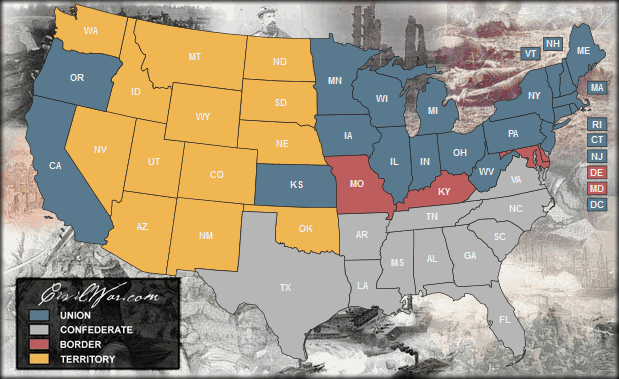
View Full Version : Was slavery the primary cause of the war?


rreese09
03-19-2006, 12:15 PM
To my knowledge, the main reason for the war was state's rights and taxes. Slavery was an issue, but main issue was what to do with them. Most southern states were in the process of doing away with slavery and alot of the slaves were sold to the northern states. Slavery was ending all over the United States and Confederate States. It's ashamed that most of the world now believes the war was over slavery. This is due to government attempted to portray the Union as the good guys and the Confederacy as the bad. More and more people that want to know the truth are beginning to find it and see that the war was fought over the same reasons the USA fought Britian.

dixierules
03-21-2006, 01:02 PM
the civil war was not fought over slavery,it was fought because the south wanted its independence form the united states due to taxation without representation, lincoln didnt evan want to get rid of slavery until about two or three years in the war, and in my opinion he only did so to get more support.

- in my opinion there never should have been a civil war the north should have minded there own buiseness and let the south do what they wanted to do, because they had no authority over the southern states.

bucktailre-enactor
03-24-2006, 06:14 PM
slavery was not an issue that started the Civil War. It was started over the tax conflict.

unknown189
03-29-2006, 01:25 AM
i believe that slavery was just 1 of many reasons of the cause

Anime_Fanatics_101
03-30-2006, 04:45 PM
While slavery was one of the causes that fueled the war, the main reason was that the North and South disagreed on what kind of Federal Government they were under. Southeners beilieved that the Union was compacted of states and that the states had more power. However, the Northeners believed the Union as a whole to have more power.
Another underlying cause was economical. The Congress was enacting trade agreements with other contries that would favor the manufacturing-centered North, while harming the more agricultural South.

cphilrun
04-01-2006, 02:37 PM
Maybe a cause for a percentage of the population, certainly contributed. I think overall, it was a suppression of states rights that was the galvanizing factor for the south. Since the south seceded the union didn't need a cause per se to ignite before hand. The souths withdrawal from the union was enough.

dixierules
04-03-2006, 01:06 PM
the south leaving the union should of had nothing to do with it because the had the right to do that,
and thay chose to.

cphilrun
04-03-2006, 05:30 PM
Hmmm dixie to bad the union didn't see it that way....wouldn't have a web site here devoted to the civil war. Right to secede from the union? I don't believe I saw that in the consitution or the bill of rights. If such was the case then the article or provision would still exist, and you guys could try it again. As it stands, the withdrawal of the states from the union was a driving force, FOR the union. You southern boys can call it anywhich way you want.

dixierules
04-04-2006, 12:09 PM
you got a good point there buddy.

cphilrun
04-06-2006, 08:37 PM
Yep it all boiled down to interpretation. The North interpreted it one way, the south the other. The abolitionists war cry was about slavery but the average joe coming off the farms and small towns in the north saw it another way. I believe ultimately the cause for the north boiled down to secession and perceived aggression by the south (Fort Sumter). It was a chapter, although a bloody one in the life of a great nation, and given sentiment expressed here, and across this nation, still a live one.

I had relatives on both sides(Virginia, Tennessee, Iowa, North Carolina and I wouldnt pick one(A side).

Savez
04-11-2006, 10:08 AM
I hate to be the stick in the mud but slavery played a more important role than many of you suggest. Look at this...

A Declaration of the Immediate Causes which Induce and Justify the Secession of the State of Mississippi from the Federal Union.

In the momentous step which our State has taken of dissolving its connection with the government of which we so long formed a part, it is but just that we should declare the prominent reasons which have induced our course.

Our position is thoroughly identified with the institution of slavery--the greatest material interest of the world. Its labor supplies the product which constitutes by far the largest and most important portions of commerce of the earth. These products are peculiar to the climate verging on the tropical regions, and by an imperious law of nature, none but the black race can bear exposure to the tropical sun. These products have become necessities of the world, and a blow at slavery is a blow at commerce and civilization. That blow has been long aimed at the institution, and was at the point of reaching its consummation. There was no choice left us but submission to the mandates of abolition, or a dissolution of the Union, whose principles had been subverted to work out our ruin.
That we do not overstate the dangers to our institution, a reference to a few facts will sufficiently prove.

The hostility to this institution commenced before the adoption of the Constitution, and was manifested in the well-known Ordinance of 1787, in regard to the Northwestern Territory.

The feeling increased, until, in 1819-20, it deprived the South of more than half the vast territory acquired from France.

The same hostility dismembered Texas and seized upon all the territory acquired from Mexico.

It has grown until it denies the right of property in slaves, and refuses protection to that right on the high seas, in the Territories, and wherever the government of the United States had jurisdiction.

It refuses the admission of new slave States into the Union, and seeks to extinguish it by confining it within its present limits, denying the power of expansion.

It tramples the original equality of the South under foot.

It has nullified the Fugitive Slave Law in almost every free State in the Union, and has utterly broken the compact which our fathers pledged their faith to maintain.

It advocates ***** equality, socially and politically, and promotes insurrection and incendiarism in our midst.

It has enlisted its press, its pulpit and its schools against us, until the whole popular mind of the North is excited and inflamed with prejudice.

It has made combinations and formed associations to carry out its schemes of emancipation in the States and wherever else slavery exists. It seeks not to elevate or to support the slave, but to destroy his present condition without providing a better.

It has invaded a State, and invested with the honors of martyrdom the wretch whose purpose was to apply flames to our dwellings, and the weapons of destruction to our lives.

It has broken every compact into which it has entered for our security.

It has given indubitable evidence of its design to ruin our agriculture, to prostrate our industrial pursuits and to destroy our social system.

It knows no relenting or hesitation in its purposes; it stops not in its march of aggression, and leaves us no room to hope for cessation or for pause.

It has recently obtained control of the Government, by the prosecution of its unhallowed schemes, and destroyed the last expectation of living together in friendship and brotherhood.

Utter subjugation awaits us in the Union, if we should consent longer to remain in it. It is not a matter of choice, but of necessity. We must either submit to degradation, and to the loss of property worth four billions of money, or we must secede from the Union framed by our fathers, to secure this as well as every other species of property. For far less cause than this, our fathers separated from the Crown of England.

Our decision is made. We follow their footsteps. We embrace the alternative of separation; and for the reasons here stated, we resolve to maintain our rights with the full consciousness of the justice of our course, and the undoubting belief of our ability to maintain it.

Every other state has the same reasoning in their "Declaration of Immediate Causes". I thought this might spark some more discussion. I would like to hear everyone's thoughts.

Anime_Fanatics_101
04-11-2006, 12:03 PM
...true, interperatation has a lot to do with it, but not all of it. The states had been together for a while now, through thick and thin. Rather than turn to God and pray about the issue, the South seceded and the North declared war. Imagine what would have happened if America had just turned back to her Provider. All of this could have been avoided. I think that was on of the primary causes of the war. America turned away from God.

GeoMcClellan
04-22-2006, 01:32 PM
The reason South Carolina seceded; distrust of Lincoln and the Republican Party. South Carolina was the last bastion of old time Whiggery and they felt these Republican upstarts would ruin the country and wanted nothing to do with it, especially when a Doofus McGoofus like Lincoln was in charge of it.

The reason for the Civil War; because South Carolina seceded and so did a bunch of other copy cats. :D

dixierules
04-24-2006, 02:12 PM
no they weren't copy cats they all believed the same things and south carolina just happened to take action first.

GeoMcClellan
04-25-2006, 03:59 PM
And what were those things they believed? That slavery should spread west and not be questioned? How dare the north even think that slavery could end!

Savez
05-02-2006, 09:40 AM
george,
your post above proves my point about the mainstream media. You have no clue. Slavery and the spread of it was about a balance of power and money. It was not a moral issue. Kansas was not a good place to grow cotton. Slave labor was not required to grow wheat. Slaves were of no use in Kansas. Unlike these others however, I believe slavery was the main cause (of many causes) for seccesion. But, the Civil War was not a moral crusade by the north to end slavery. Anyone who believes that is sticking their head in the sand.

GeoMcClellan
05-02-2006, 03:03 PM
I never said the war was a moral crusade to end slavery. The war happened because partisan politicians like Lincoln and his party played upon fears of both sides and antagonized the south. And that cursed Blair family!

Historygirl
05-02-2006, 07:17 PM
It did not start out as a war over slavery but soon became one of the main and most important one.True taxation was the cause in begining. :D

zudz
05-03-2006, 05:15 AM
Hist. girl is correct. It didn't start out about slavery throughout the entire Confederacy as it ended up. The greatest problem over slavery at the beginning of the war was the fact that the Southern states wanted to expand slavery into the new western region (Kansas Territory, California ...etc). There was very heated debate over this subject, but it was not enough to cause seccation on it's own. As much as taxation was a problem, the largest factor in the start of the war was the problem of fair compensation for the raw materials that the south was providing to the northern mills and factories. These materials were being manufactured and sold at much greater profit to the northern textilers than to the southern producer. This caused a great rift in the nation that was then furthered alond by other issues such as slavery and other political differances.

bropey
05-21-2006, 10:39 PM
Im only 14 and I would like to thank you for all your information but this is the way I see it.

The Confederacy was afraid of Lincoln and the Republican Party. All the speeches and declares against slavery freeked the Confederates out. But Lincoln was after saving the union, he knew if he allowed the states to secede then the union would fall. He wrote the Emancipation Proclamation which he published after some great victories. It was basicly a compromise, but the way he wrote it was briliant. He turned the whole war into the fact of slavery, which later created the Confederacy to lose allies. England and France were against slavery and banned it in their contries. So releasing the Proclamation and turning the war into slavery made it difficult to allie with the Confederacy who was battleing for slavery. The simple fact is that the wars main cause was states rights, just the war was later turned into slavery as the reason to fight just so that Lincoln could protect his country and save the union.

-Will Spalding 8th Grader from Olympia Washington.

blcknewyork
05-29-2006, 01:24 AM
This is the text I posted from a previous discussion on this same topic:

We owe the American Civil War to the presence of slavery in the United States. The states that would eventually form the confederacy felt that agreements established by the "founding fathers" were not being adhered to, namely the right of property, specifically slaves. Slaveholders felt they should have the right to have slaves in any state in the union and the right to establish slavery in the United States territory. If not they felt non-slave states should not outnumber slave states for this would be detrimental to their institution due to misrepresentation in both houses and would ultimately lead to the weakening of African slavery and its extinction in America. They felt they were given the short end of he stick with legislation such as the Missouri Compromise. Lincoln made known his disdain for the spread of slavery but was adamant about defending it where it already existed. The two presidents before him likewise defended laws with extreme action (military response to northern disobedience of the fugitive slave laws of 1850) in favor of southern slaveholders. Not willing to see United States territory admitted exclusively as non-slave states, secession conventions were held and southern states starting with South Carolina seceded. Seceding states wrote documents of secession detailing why they were removing themselves from the union and forming a confederate government. These declarations of secession, one for each seceding state, listed slavery as the reason for secession. Google "Declaration of secession" and read them for yourself. One would have to be delusional to believe slavery was not the most important reason the civil war was fought.

Read the minutes from a few congressional debates between the beginning of the government and the 19th century. Not only will one realize the primary cause of the civil war was slavery, you will hear secession being threatened time and time again during discussions as early as the African Slave Trade debates. A lot has to be ignored to not realize that slavery was the primary cause of the civil war.

cwalenta989
08-02-2006, 01:19 PM
Slavery is the cause of the war. Without slavery, secession does not occur. Why does South Carolina secede first? South Carolina had not only the largest percentage of slaves, but actually had a MAJORITY slave population. Now, if you were a slaveholder, wouldn't you fear a democracy composed of voters of your formerly oppressed slaves (similar to the problem o apartheid in South Africa).

The North fighting the war to 'preserve the Union' does not mean South did not secede to prevent Northern abolition. Remember secession ONLY occurs after free states obtain a majority in the Senate.

The right to secede WAS ambiguous. (It is now CLEARLY illegal). The legal argument against secession points to the Articles of Confederation which sites a 'perpetual' union. The Constitution was made to form a 'more perfect union' - the US Government under Constitution is a successor (legally) to the government under the Articles. Furthermore, the Supreme Court held in Texas v. White (1869) that all ordinances and laws in furtherance of secession were 'null and void' (Of course this decision occurs four years after the fact) I grant that the topic of the legality of secession is at least worth debating. Interesting debate would be a potential statehood for Puerto Rico - if Puerto Rico becomes a state could it be permitted to secede even though other states are (statutorily I might add) prevented from seceding?

Just because slavery is clearly the spark doesn't mean 'state's rights' ISN'T ALSO an important consideration. We cannot forget that Virginia's real objection was Lincoln calling on Virginia to raise troops to suppress rebellion in sister states.

Look forward to your responses, haven't posted here in a while, figured I'd stir up the pot.

BobbyLee
08-08-2006, 03:08 AM
Slavery is the cause of the war. Without slavery, secession does not occur. Why does South Carolina secede first? South Carolina had not only the largest percentage of slaves, but actually had a MAJORITY slave population. Now, if you were a slaveholder, wouldn't you fear a democracy composed of voters of your formerly oppressed slaves (similar to the problem o apartheid in South Africa).

The North fighting the war to 'preserve the Union' does not mean South did not secede to prevent Northern abolition. Remember secession ONLY occurs after free states obtain a majority in the Senate.

The right to secede WAS ambiguous. (It is now CLEARLY illegal). The legal argument against secession points to the Articles of Confederation which sites a 'perpetual' union. The Constitution was made to form a 'more perfect union' - the US Government under Constitution is a successor (legally) to the government under the Articles. Furthermore, the Supreme Court held in Texas v. White (1869) that all ordinances and laws in furtherance of secession were 'null and void' (Of course this decision occurs four years after the fact) I grant that the topic of the legality of secession is at least worth debating. Interesting debate would be a potential statehood for Puerto Rico - if Puerto Rico becomes a state could it be permitted to secede even though other states are (statutorily I might add) prevented from seceding?

Just because slavery is clearly the spark doesn't mean 'state's rights' ISN'T ALSO an important consideration. We cannot forget that Virginia's real objection was Lincoln calling on Virginia to raise troops to suppress rebellion in sister states.

Look forward to your responses, haven't posted here in a while, figured I'd stir up the pot.

I agree.

While states' rights became the pressing issue which finally pushed the southern states into secession, the driving need to assert their rights over the federal government was protection of their "peculiar institution."

I have found it quite interesting that the "fire-eaters" who so enflamed the south until secession happened weren't heavily represented in the Confederate government. Was it that after the states took such a drastic step they suddenly decided that this new course was far too troubling to entrust it to hotheads?

Concerning the north...No, they did not go to war to abolish slavery. They went to war to preserve the status quo (with slavery intact), but the war soon escalated beyond anyone's control.

In one sense, it truly was an "irrepresible conflict" between two ways of life. I do believe that the possibility existed for an eventual abolishment of slavery without a war, but cooler heads waited too long to go to work.

Natty
08-15-2006, 03:12 PM
Less than 5% of the Southerners had slaves. And the rich people had slaves not the ones doing the fighting.

Many Northern states also had slaves.

Even William Penn of PA was a slave owner.

The secession of Southern states was for basically the same reason we wanted to leave England earlier.


The South was fighting because their land was invaded by the northern Army.

Maybe the Yanks were told they were fighting to free the slaves, but gee why didnt they start in their own backyard?

charge_of_glory
08-30-2006, 11:51 PM
Don't bring Penn into this. He died in 1718. At that time almost no one questioned slavery or believed in equality. Sorry if I ruined your argument but you can't make the North look bad by saying someone from the 18th century was a slave owner. If anything, it makes you look foolish.

I have to thank you though because I finally realize how young men could give up their lives for their state. I felt their sense of loyalty when you attacked Pennsylvania. That's why I just had to defend the founder of my state.

Natty
09-15-2006, 08:33 AM
Most yanks sincerely believe the war was faught to free the slaves.

They are only ignorant because the truth is not taught in Northern schools, only yankee propaganda.


Otherwise they would know that the great emanicipator himself, and hero to the yanks Abe lincoln married into a slave owning family. Hmmmm.


And they dont even know that many Northern soldiers and even Northern generals owned slaves.

Generals Grant and Sherman owned slaves. Hmmmm.

And the Emancipation Proclamation only freed slaves of the Confederate states.

Yankee slaves did not apply....

Bet you yanks didnt know that or you would never think the war was about freeing the slaves....

Natty
09-15-2006, 08:45 AM
Mr.O'Bruadair, The 2 richest per capita counties in the US as of 2006 are Fairfax county VA and Montgomery county MD.

Both are former Slave states.

Your argument just went down the toilet Sir.

charge_of_glory
09-25-2006, 08:51 PM
Some Northerners believe it was faught to free the slaves because that's why some people fought. It was a reason for some, get it right. Don't trash our schools either since you've obviously never been to one. Besides, at least our schools teach the real outcome of the war. In the South, they used to teach children that they had won. Talk about propaganda. As for Licoln, he married into the family, but he didn't own those slaves. Many Northern military members didn't own slaves either. Not many people in the North did period. "Yankee" states didn't apply in the E.P. because they were already free states. So you see, I knew that and I'm a "Yank". I still think the war was about freeing slaves, among other things. Get your head out of places it doesn't belong.

Natty
09-28-2006, 04:55 PM
http://www.gmu.edu/departments/economics/wew/articles/00/black_confederates.html

I should not have to do your research for you. The 4th paragraph explains that Grant not only owned slaves but he didnt even free them after the Emancipation Proclamation.

Natty
09-28-2006, 04:59 PM
http://www.thetandd.com/articles/2006/02/27/news/doc4403c5e8c5621807671978.prt

The 7th paragraph here explains about Shermans slaves.

Natty
09-28-2006, 10:06 PM
You asked for "one primary source" read your own writing.

Ever heard of Google? Type in 'Grant owned slaves' you will get over 1,000,000 hits read some of them....

Duhhh.

Natty
09-29-2006, 08:17 AM
"Oh, and if you type in 'Grant owned slaves' the first hit you get off of Google is a *beep* mens chat site."

Not on my computer. What have you been looking at son?

Natty
09-29-2006, 08:20 AM
Sign in

Web Images VideoNew! News Maps more » Books
Froogle
Groups
even more »

Advanced Search
Preferences


Web Results 1 - 10 of about 1,060,000 for grant owned slaves. (0.05 seconds)

Which US Presidents Owned Slaves?Yes. The only evidence that USG owned slaves is a document he signed in 1859 freeing one, William Jones. However, Grant certainly had some control over and ...
www.nas.com/~lopresti/ps.htm - 70k - Cached - Similar pages


Rob LoprestiMany presidents who owned slaves found it abhorrent to sell one, ... Grant apparently never bought or sold slaves but his wife received some from her father ...
www.nas.com/~lopresti/rank.htm - 11k - Cached - Similar pages


Ulysses S Grant National Historic Site - Slavery at White Haven ...In 1859, Grant freed William Jones, the only slave he is known to have owned. During the Civil War, some slaves at White Haven simply walked off, ...
www.nps.gov/ulsg/historyculture/slaveryatwh.htm - 35k - Cached - Similar pages


Robert E. Lee owned slaves and defended slavery: Geekery Today ...The savior of the north, US Grant, also owned slaves which he freed in 1859. The irony is that a large number of union generals owned slaves and did not ...
radgeek.com/gt/2005/01/03/robert_e - 231k - Cached - Similar pages


'Write the Truth' - Volume 16 No. 4 - Summer 2002 - Rethinking ...But it was a shock that Grant had owned slaves. "He was the commander of the Union army in the Civil War," I explained. "When I first learned about the ...
www.rethinkingschools.org/archive/16_04/Writ164.shtml - 34k - Cached - Similar pages


Birdman Bryant: Free Black SlaveownersCharles Harris comments that many of the Confederate Generals were slave owners. true, but Union General Us Grant owned 4 slaves. At the outbreak of the ...
www.thebirdman.org/.../Others/Others-Doc-Blacks/Doc-Blacks-Slavery&Reparations/FreeBlackSlaveowners.html - 19k - Cached - Similar pages


Dump Grant! [Archive] - JustUsBoys.com *** CommunityGrant owned slaves while Lee had freed his. Washington owned slaves. Lincoln never thought of blacks being equal to whites (look at his speeches) and the ...
www.justusboys.com/forum/archive/index.php/t-69890.html - 14k - Cached - Similar pages


[PDF] White New Yorkers.qxdFile Format: PDF/Adobe Acrobat - View as HTML
Far more typically, white people who owned slaves worked them hard, used physical ... and denied them rights that whites could take for grant- ...
www.slaveryinnewyork.org/PDFs/White_New_Yorkers.pdf - Similar pages


THE CORRUPT TREE: Ranking the PresidentsWe also downgrade presidents who have owned slaves and not freed them. ... stabilized the most amazing period of growth in human history begun under Grant. ...
thecorrupttree.blogs.com/my_weblog/2005/11/ranking_the_pre.html - 18k - Cached - Similar pages


Southern Educators Perpetuate Myths When They Should Know BetterBorn a slave in 1790, William Ellison owned 63 slaves by 1860, ... And General Ulysses S. Grant, who accepted Lee’s surrender on behalf of the Union at ...
www.daveblackonline.com/southern_educators_perpetuate.htm - 15k - Cached - Similar pages


Result Page:

1
2
3
4
5
6
7
8
9
10
Next


Free! Speed up the web. Download the Google Web Accelerator.

Natty
09-29-2006, 02:26 PM
Hey Deserteagle, its history, if you cant accept it or are embarrassed or ashamed or ignorant of the yankee hipocracy so be it.

Sorry but I dont have time to do some school kids research.

Natty
09-29-2006, 03:04 PM
"Generals Grant and Sherman owned slaves!?!? I'm having and allergic reaction to all the B.S flying around here. That argument is so full of holes that it couldn't hold a drop of water."

Those are your words. Just thought I would enlighten you. Cant change the truth. Cant rewrite history. They both indeed owned slaves.

If you cant handle the truth, why are you on a HISTORY forum?

charge_of_glory
09-29-2006, 04:18 PM
Natty, are you that oblivious to what deserteagle is saying? Jeez, even a 6th grader could see how wrong you are. Stop avoiding the fact that you don't know what you're talking about. d.e. obviously knows a lot more than you do when it comes to research and history, so just drop it.

Natty
09-29-2006, 04:50 PM
He didnt even know Grant and Sherman owned slaves. Then when told this, he refused to acknowledge it.

Your post is pretty funny Charge of Glory LMAO.

charge_of_glory
09-29-2006, 04:53 PM
So is your stupidity.

Natty
09-29-2006, 05:37 PM
Thank you for being man enough to admit that you were wrong and Grant did indeed own slaves.

Now research Sherman and the fact that he also owned slaves. Which you also had trouble with.

VTYank09
10-25-2006, 11:50 PM
"due to taxation without representation"

This is not the American Revolution here. This is American democracy. The South was not under the rule of a foreign government, maybe they saw it that way, but that's not the point. After Lincoln's election in 1860, the South was still in great shape. Southern Democrats still controlled Congress and the U.S. Supreme Court. All 9 justices were Democrats and 5 came from Southern slaveholding families. Chief Justice Roger Taney was a supporter of slavery. The common misconception about Lincoln was that he was an abolitionist and this is not true. Lincoln believed in the inferiority of the black man and did not want to abolish slavery where it already existed in the South. He just wanted to stop it from expanding. The only way to get rid of slavery is by a Constitutional Amendment and you need 3/4 of the states to ratify it. 1/2 of the states in America at the time were Southern states. Taxes were a minimal cause of the war and took place back in the antebellum days of the South. States Rights were not mentioned until the 1850s. While there were many major causes of the Civil War, the primary cause, the primary battle was over the fiercely contested issue of slavery. That was the main issue of the times.

VTYank09
10-28-2006, 08:39 PM
So no one thinks slavery was a major cause of the Civil War? You think it was all an excuse to start a war? It's all about taxes and States Rights, or which region controls the government and which way the country goes, towards industry or agriculture? Here's what the President and Vice-President of the CONFEDERATE States of America had to say.

Jefferson Davis on slave labour, "was and is indespensable. With interests of such overwhelming magnitude imperiled, the people of the Southern states were driven by the conduct of the North to the adoption of some course of action to avert the danger with which they were openly menaced."

Alexander H. Stephens (V.P.) speaking on how the Confederate constitution put to rest all of the questions regarding slavery, "This was the immediate cause of the late rupture and present revolution."

The South viewed the Northern armies as invaders. They had to defend their families and homes. Most importantly they had to defend their way of life, and the institution they based it on, slavery. The South could not survive without slavery.

As I said before there were many causes, and I'm not saying that taxes and States Rights weren't an issue. I'm just making the argument that slavery was the primary issue. They had argued over it since the end of the importation of slaves in 1808. It ultimately led to war. I thought the quote below was interesting :D
------------------------------------------------------------
"I wish that I owned every slave in the South, for I would free them all to avoid this war." - Robert E. Lee

VTYank09
10-28-2006, 08:50 PM
"I may in some circumstances compare your CW with a so-called CW that took place in Germany.
Here too the main reason was the hegemonial power over the German countries.
It was the question whether the more improved Prussia in the north will have the power or the more "old fashioned" Austria-Hungary in the south.
( BTW that war took place 6 months after the US CW - Prussia has won this fight )

However, in the US CW it was a question which system will dominate the US."

Oh and by the way, what was the South's AGRICULTURAL system based on I wonder...SLAVERY. The South couldn't survive without it. Yes many historians believe that eventually slavery would have been abolished. But you can't get rid of it over night because it would have thrown the South into chaos. All the free black men running around...chaos for the South.

And real quick, the correct term is Civil War, not War Between the States. The definition of a Civil War: people from the same area struggling for control. And as I mentioned the South, struggling for control or their independence to control their way of life, was based on SLAVERY.

VTYank09
10-30-2006, 11:19 PM
Chief, you make some very good arguments/points. If I am coming off like I believe slavery was THE one and only cause, I apologize. I did not mean my arguments to sound that way. But I do believe that slavery, in one way or another, was a cause, a major cause, of the war. I think some underlying reasons that had connections to slavery, or slavery motivating it, caused the war as well. But there were other reasons, important as well, with no connections to slavery at all.

You are also right, and I agree when you state that not the whole South owned slaves. Only few did. Some general figures to back you up: About 1.5 million families (3/4 of Southern population) had no slaves. Around 345,000 had 10 slaves or less and the "elite" top 1,700 families of the South owned more than 100.

Your argument that the North relied on the South for materials and such and the South on the North for machinery...excellent. I could not agree more. The North depended on the South. I haven't done much research on that so I dont really know.

The rights of the South to become its own nation is in question too. While in some ways I agree with their reasoning, secession was not mentioned in the Constitution for example, the Confederate govt. was full of contradictions and moments of hypocrisy. They believed one thing, but practiced another due to the current circumstances.

If you closely read the states secession proclamations and the Confederate Constitution, it reveals that it was primarily one state right that impelled their separation: the right to preserve African American slavery within their borders. These are just a few quotes from men of that time period on slavery, this is what they believed. I'm not necessarily trying to back my argument up, but I'm just showing that some people from this time period also believed slavery to be a cause of the war.

A North Carolina newspaper editorial: "it is abolition doctrine . . . the very doctrine which the war was commenced to put down."

Robert M.T. Hunter, Senator from Virginia, "What did we go to war for, if not to protect our property?"

James H. Hammond Congressman from SC: "the moment this House undertakes to legislate upon this subject [slavery], it dissolves the Union. Should it be my fortune to have a seat upon this floor, I will abandon it the instant the first decisive step is taken looking towards legislation of this subject. I will go home to preach, and if I can, practice, disunion, and civil war, if needs be. A revolution must ensue, and this republic sink in blood."

From the diary of James B. Lockney, 28th Wisconsin Infantry, writing near Arkadelphia, Arkansas (10/29/63): "Last night I talked awhile to those men who came in day before yesterday from the S.W. part of the state about 120 miles distant. Many of them wish Slavery abolished & slaves out of the country as they said it was the cause of the War, and the Curse of our Country & the foe of the body of the people--the poor whites.

Sterling Cockrill, planter from Courtland, AL, "The South had $2,000,000,000 invested in Slaves. It was very natural, that they should desire to protect, and not lose this amount of property. Their action in this effort, resulted in War. There was no desire to dissolve the Union, but to protect this property."

As I said before, just some people who also believed slavery to be a causing factor. And of course, its all opinion. One final thing, to add to your Lincoln quote, Lincoln also said that the Union could not survive half-slave and half-free. Hmmm...interesting. Haha, thats something else to debate. Well, thats all for tonight, goodnight. Peace out! :D :wink:

Lucinda
11-17-2006, 11:49 PM
This is an interesting discussion. I'd like to join in. I'm positive that there will be many who disagree with my opinion, but I believe that slavery was THE primary cause of the American Civil War.

Now, I am well aware that the soldiers who fought on both sides had many motivations for joining the war effort. However, the issue at hand is what actually CAUSED the war. Beyond question, I believe the cause to be the issue of slavery. The Southern states needed slavery in order to continue their agricultural economy. In the North, there were a number of abolitionists, but I think the average citizen north of the Mason-Dixon line did not have strong feelings either way regarding slavery. Actually, the main bone of contention between North and South in the years prior to the Civil War was whether or not to allow slavery in the new territories that came into the U.S. because of the Mexican War.

Because the South relied on slave labor in order to survive, they wanted slavery in those territories, the North did not. Let's take a look at the many
events leading up to the war:

1) The Missouri Compromise - 1818
2) The Compromise of 1850
3) The Kansas-Nebraska Act
4) The Supreme Court case of Dred Scott - 1857
5) The strengthening Republican Party - Lincoln/Douglas debates
6) The John Brown Raid in Harpers Ferry - 1858

All of these events directly led up to the 1860 election of Abraham Lincoln and the South seceding from the Union.

The details of the 6 events listed above can be found online or in any books about the Civil War and slavery. I ask all who respond to my post to briefly research each event. You will find that slavery was the ONLY issue bringing about all of the events I listed.

Indeed, "State's Rights" issues drove the Southern states to secede from the Union, and I think the reason the Southern states seceded was because they felt their way of life was being threatened by the North...that way of life depended on slave labor. Slavery was the cause. No matter why the average Union or Confederate soldier chose to take up arms against their fellow Americans, each one of those who participated did so because of the politics of the issue of slavery.

I am not implying in any way that other motivating factors were not involved. My point is that when one asks "What caused the American Civil War?", that cause was slavery. Just do some research on the political events of the early to mid 1800's. There seems to be no bigger issue.

And now, I'm prepared to be faced with quite a debate. I'm looking forward to it!

Regards,

Lucinda

Lucinda
11-18-2006, 06:34 AM
Possum,

I believe the issue of slavery has been debated ever since the Founding Fathers met in Philadelphia as delegates of 13 colonies...Before The U.S. was even a Nation.

I did not say that the issue of "State Rights" did not bring about the firing on Fort Sumter or any of the events immediately preceeding that event. The politicians in the South were, indeed, concerned about their rights. They did not want any other political force (ie: The Federal Government) to dictate to them.

I am also well aware of Lincoln's First Inaugural Address and the contents of his letter to Horace Greeley. Lincoln was a politician. He knew how to present issues in the very best light.

The debate for States' Rights was based on the issues of slavery. The economic structures of the North and the South were vastly different. The South, in order to expand, needed slavery to be legal in new territories. The Plantation-owning South did feel that the right of a state to secede was paramount and they chose to do so. There is no debate needed on that issue.

Again, I say simply look at the major political events leading to the Civil War. They were, in fact, all based on slavery. That is why I stand firmly on the belief that slavery was the cause of the American Civil War.

Respectfully,

Lucinda

Lucinda
11-18-2006, 03:17 PM
Possum,

I had not read your "off-topic" posts before. I did not think off-topic posts dealt with Civil War issues. I see I was wrong.

Indeed, you have presented many valid and truthful points. I am not taking issue with the South, or the North, for that matter. I am basing my viewpoint on historic fact, too. Hypocrisy has existed as long as there have been human beings on this Earth. Yes, the South was treated unfairly at times. Yes, there are those who form their opinions in ignorance.

Even though I have lived in the Northeast U.S. all of my life, I see the wrongs in sectional beliefs. My bookshelves have a much higher count of Confederate histories than Union. I greatly admire men like Robert E. Lee, Thomas Jackson and many others who held true to their convictions. Would anyone not agree that they believed they were on the "right" side?

I also know that good and evil has always coexisted among all of mankind. My views do not argue with right or wrong. Not all Northern citizens of the Civil War era were wrong, and certainly very few were truly honorable in their views of slavery. I am from an area of Pennsylvania which is heavily populated with those of Quaker beliefs. There is a VERY active Quaker congregation in my hometown. There are scores of historic properties throughout my area which were used by the Underground Railroad in the 1800's. Please do not think I am praising religion...I am not. Actually, I hold the belief that "religion" is not equated with "morality" at all. That's all I will say about religion. My point is that I accept history for what it was. The events of history are facts, many times those events transpired because of foolish mistakes made by those involved. Rarely, history has played out because of "the right reasons."

Again, the question at hand is "Did Slavery Cause the Civil War." I say, yes sir, it did. Regardless of any other issues, or of mistreatment of either side, or even the argument of who was right or wrong, the issue of slavery brought about the war.

There seems to be an abundance of books on the market today dealing with "what ifs." Nearly all are written about the Confederacy being victorious and what would have happened if that were the case.
I would like to take the liberty of momentarily changing history from the colonial times through the Civil War.

Let's say that slavery was abolished in the Declaration of Independence. The Unites States of America was without slavery...

a) The Missouri Compromise would not have happened b/c Missouri would have been admitted to the Union as a free state along with Maine. The 36/30' boundary would not exist.

b) The Compromise of 1850 would not have been part of our history. California would have been admitted to the Union and those territories acquired during the Mexican War would not have needed territorial governments.

c) The Kansas-Nebraska Act would have been negated completely b/c it was passed in order to repeal the Missouri Compromise.

d) No Dred Scott Case...He would have been free.

e) John Brown would have had no reason to even consider going into the South to forcibly free any slaves.

f) The Republican Party would not have risen out of a staunch anti-slavery stand.

All of these events WERE historic facts. All of them happened because of slavery. As such, I still say the issue of slavery was the immediate cause of the war. Without that issue, the history of the United States would have been written much differently. Sadly, that was not the case and many innocent and valuable lives were lost. It was not a glorious cause for either side and certainly did not produce glorious results except freedom for the slave. Equality would not come for another century.

The South suffered greatly because of the Civil War. A great deal of that suffering was dealt by the North. Another portion was caused by the rash acts of a few very angry and powerful Southern men.
There were fanatics on both sides then, as there are fanatics today. The shame is that, too often, those fanatics make history and cause great sorrow.

Again, respectfully,

Lucinda

Lucinda
11-18-2006, 07:56 PM
I just noticed a typo in one of my earlier posts...I typed a double 18 and listed the date of the Missouri Compromise as 1818. In fact, the year was 1820. March 3rd to be exact.

Sorry!

Lucinda

*Possum, I will spend some time researching your information about the cause of the war. I AM willing to consider the opinions of everyone and I believe the only way to respond appropriately is to study the facts about those opinions. I will get back to you to discuss this further. Thanks for making this such a lively topic!

Lucinda
11-18-2006, 11:04 PM
Possum,

I pulled quite a few of my books about the antebellum South and have been reading the details of the protective tariffs. You are correct that those tariffs brought many benefits to the North. It seems that there was a strong feeling in the South that, because the Southern economy was primarily agricultural, they did, indeed pay higher prices for goods. This appears to have added to Northern profits. I'm not clear about the reasons the South paid more. I think it was due to exportation and importation. Is that correct?

The North reaped the profits because more public projects were funded in that region...twice the amount as were funded in the South. This led to increased "bad blood" between North & South.

All of this led to the nullification controversy in 1832. South Carolina held the opinion that the tariff was null and void. The idea of secession was put forth by John C. Calhoun. He described the leagalities of secession, stating that a State could sever it's ties to the Federal government if there was evidence that the Union practiced unfair methods of power.

The Federal Government came out the victor in the nullification issue/crisis of 1832. However, the issues were once again brought to the front at the onset of the Civil War.

The thing that bothers me about this theory is a fact I came across in my "investigative reading"...
Those same protective tariffs which did favor the North in 1832 had, by the time the 1860's approached, been lower than at any other time during the 50 years prior to the Civil War.

So far in my research, I will still stand behind my belief that slavery was the issue that overshadowed all others in bringing about the war.

The economics of the times certainly led to Southern sectionalism. However, the massive gains in territory following the Mexican War created issues which did bring slavery to a position of dominance in the political realms of the nation.

I will continue to read and learn more about the points you have presented. I feel quite strongly that my view will not change, but I will consider all the facts.

May I ask you to offer your take on the irony of the tariffs being at their lowest in the late 1850's?
I am passing no judgement and wish to continue this discussion. I find it to be quite interesting. I also believe we are both very well read on the subject and I enjoy an intelligent debate a great deal.

With kind regards,

Lucinda

Lucinda
11-19-2006, 08:23 AM
Possum,

I am familiar with Charles Adams' book. He makes many valid points on behalf of the revenue-based theories. I find it of paricular interest that Charles Dickens is often quoted in the book. That is certainly an indication that other countries saw the war as being about more than the issue of slavery.

I have also read "The Republic of Republics" by Bernard Janin Sage. In fact, I discovered this book while visiting the website of The Confederate Reprint Company. There is much information on the site which validates the South's decision to secede. The issue of States' Rights is the prevailing theme of the website. You see, I do give quarter to the issues of BOTH sides.

Obviously, as the Southern economy relied upon the ability to continue using slave labor, the members of the slave-holding South did not want anything to interfere with the need for slavery. The Constitution of the United States set laws to protect the property of all citizens. Naturally, because slaves were "property," the owners of those slaves resented any and all attempts to disrupt their way of life...a way of life that was based on slavery. The Constitution supported their views.

I digress. The thing that MOST angered the South was the election of Abraham Lincoln. Lincoln rose to power because he was backed by the Republican Party. A new political party that was created by individuals who's main focus was "free labor." Indeed, the primary interest of the group was economic advancement, mainly to benefit the North.

The Republican party was divided amongst itself regarding the issues of the day. Those among them who were strongly anti-slavery happened to also be the most forceful and influential members.

In any case, there was much antisouthern feeling by the North. I do not disagree. However, while a strong antisouth sentiment grew in the North, the South was beginning to present a strong unified front
politically, too. By the time 1860 arrived, I believe that the sectional division was so extreme, the slavery issue did overpower all other "causes," including recession and other economic issues.

My opinion still remains that all other events within the United States at that time failed to remove the issue of slavery and failed to divert the attention slavery was given by the average citizen.

No matter the poitics, the economy or the desire for cooler heads to prevail, as long as slavery was still on the table, that table was, indeed, set for war. And that war was served. Brought into the lives of young men who probably did not hold such strong views either way...Southerners who did not even own slaves, and Northerners who did not especially care about the primary issue of slavery. As has been written many times, it was a rich man's war and a poor man's fight!
Has it not always been thus, throughout all time? In almost all wars? Does it not still bring on bloodshed today?

My response is yes. And my opinion remains that slavery was the issue and, regardless of anything else, it was then seen as such by the average citizen who was the one asked to enter into harm's way to further the causes of the politicians. If nothing else, both sides were guilty of slaughtering nearly an entire generation of men. That is the bottom line. It was a sad affair for all, including those in bondage. They would fight for their rights for many more long and bitter years.

I remain "steadfast to the last" that slavery WAS the issue which brought the war into the lives of the American citizens.

Respectfully,

Lucinda

Lucinda
11-19-2006, 10:02 AM
:shock: In reviewing my most recent post, I see that I have once again been "beeped!" I believe I have recently been given the title of "politest poster"on the forum. I am not prone to foul language(at least not in my writing)! :?

I find it highly entertaining that I was "given the beep" for typing the last name of the author of many great works of literature. Among them "A Christmas Carol." A tale that spreads good tidings to all mankind at this "most wonderful time of the year."

Perhaps I must reevaluate my take on good manners and say an emphatic "Bah, Humbug!" As you cannot see my actual expression right now, I will say that I am in very good humor and greatly amused!

Now, I shall check this post to see if I have received another "beep" for my above quote relating to good manners.

I now unerstand why so many of my friends have been saying the the internet is a better form of entertainment than television. It most surely is!

I think LOL is the proper close for this post...am I correct?

"Laughing Lucinda" signing off! :P

Lucinda
11-19-2006, 10:11 AM
Possum,

Just a quick note to say I have taken us to page 6 with my last post. In order to view my response to your last posts, you must return to page 5.

Lucinda

* I am most appreciative that I was not "beeped" again!

Lucinda
11-21-2006, 07:03 AM
Possum,

I will, most certainly say that slavery was one of the many issues leading to war. I don't believe I indicated that I disregard all other causes. In the 19th century, as today, the motivating factors which led to wars were diverse. One could say that every individual views events differently.

I have been interested in American history since I was a very young child. I am not one who won't talk about my age...It's been about 40 years. I do not stretch the truth when I say I have over 1000 books in my personal library. Most of them are about the Civil War years. I have read extensively about the war and I am familiar with all of the views about the causes of the war.

Many authors and historians continue to debate the issues amongst themselves, too. You and I are in good company in our differing views.

I suppose the point I've been trying to make all along, is that there were different views during the 19th century. There will always be differing views.
I know, beyond a doubt, there were many factors which brought about the Civil War. I feel that the issue of slavery is the primary theme in every book I have read. I did not live during the 1800's and cannot really say what was in the hearts and souls of those who did.

I have many first-hand accounts and diary reprints. Many of them present slavery as the cause. One outstanding volume I would suggest that you might really enjoy is "Voices From the House Divided: The United States Civil War as Personal Experience" written by Glenn M. Linden & Thomas J. Pressly. The book covers the events of the Civil War years using only the accounts of 20 individuals. To read the words of actual participants in the events of the 19th century is really the best way to truly understand what people actually felt in their souls.

In any case, I will agree that there were many causes which brought about the Civil War. I will also add that I do see slavery as a leading issue throughout the early years of U.S. history.

I do respect you very much, Possum. You have provided one of the most intelligent debates I have ever had with anyone regarding the Civil War.

I look forward to many more exchanges with you on this forum!

Warm regards,

Lucinda

Lucinda
11-22-2006, 11:43 AM
Possum,

I believe that you will find "Voices..." to be quite good. It's told by those who did have very different views of the Civil War and actually lived through those difficult years.

If you really want to delve deeply into the history of the early years of the United States, I suggest the book: "The Rise of American Democracy - Jefferson to Lincoln" by Sean Wilentz. I finished reading it about 3 months ago and found it to be extremely well written. Be warned, though, it's a hefty volume...796 pages of text and then pages of notes...1044 pages from cover to cover. It's one of the best books I've yet read on the subject of early American politics.

Kind regards,

Lucinda

Lucinda
11-23-2006, 07:56 AM
Actually, South Carolina adopted an ordinance of secession on December 20, 1860. They were the first to leave the Union, but other Southern states followed their lead over the next several months.

The forts off the coast of Charleston, S.C. were a primary concern for North and South. Major Robert Anderson (U.S.) was told not to initiate aggression with South Carolina. He was given instructions that he could abandon his position at Fort Moultrie. On December 26, 1860 he did move his troops to Fort Sumter.

This move was, in fact, viewed as an act of aggression by South Carolina authorities. Buchanan was still the President at this time and he chose to avoid confrontation, but he did refuse to abandon Sumter.

In any case, the situation continued to deteriorate. Other states left the Union and Fort Sumter was on the minds of everyone. Anderson badly needed supplies and they were sent on a ship named "Star of the West." The ship came under heavy fire when it approached the fort and it turned back. That was in Janusry, 1861 and there are many other details about it, too lengthy to get into here.

Fort Sumter was fired on by the Confederacy on April 12, 1861, again because of approaching supplies. By that time, Lincoln was President...the "bad blood" between Noth & South had boiled over and the war was begun. In Lincoln's inaugural address, he said to the South "You can have no conflict without being yourselves the aggressors." The Confederacy had now fired the first shots and Lincoln was able to say the choice to fight was made by the South. Lincoln called for 75,000 troops to quell the insurrection.

The rest, as they say, is history.

Regarding the actual "right of secession"...that's a topic which brings on a great deal of debate and argument. No matter what we think about it today, it happened in 1861, and no amount of debate changes the events of that time. I do not want to bring on another Civil War here, so I will say nothing about the "rights" of a state to leave the Union.

I hope this has helped.

Lucinda

Lucinda
11-25-2006, 07:58 AM
Yankeegal,

Life in 19th century America was quite different than it is today. There are many opinions regarding the South's "Right" to secede from the Union.

Southern leaders believed that the U.S. Constitution did, in fact, support that right. Of course, the Federal government did not agree and saw the act of secession as an act of rebellion.

The answer to your question is...the Confederate states believed they were free to secede and did so.
In the eyes of Southern leaders, they were a separate
nation. There are rational reasons to support their view. The Federal government was, in the views of the South, abusing their power and a state had the right to remove itself from the Union if they believed that to be the case.

On the other hand, in the eyes of Northern leaders, the Confederacy was not a recognized "nation" and the North felt it was their duty to bring them back into the "fold."

So, the answer you are seeking is one that is still being debated to this day. The events unfolded as they did and the Civil War changed our nation.

Read some first-hand accounts written by participants of the events...that will give you a better understanding of what people really believed...not modern day opinions. I hope this has been more helpful than my previous post. There really is no definitive answer. It's all up for conjecture.

Personally, I would add that as citizens of the United States, we are each entitled to our own opinions, and have the right to express those opinions. We are quite fortunate to have those rights. The men and women in the Armed Service of this nation protect those rights every day. We owe our thanks to them.

I believe, as citizens of the U.S., each of us must think about how we are viewed as a Nation on the international stage and by our fellow countrymen. We are very lucky, but we must respect the rights of others, too. I believe the Civil War was brought on by people who forgot that.

We must be mindful not to repeat the mistakes of the past.

Lucinda

Lucinda
11-29-2006, 07:31 PM
BRAVO! Very well said!

Lucinda

VTYank09
12-06-2006, 10:41 PM
Secession was never seriously questioned before 1869 because it never had to be really. In 1814 New Englanders held the Hartford Convention to protest against "Mr. Jefferson's War" (aka War of 1812) and to discuss secession. Nothing happened though and it was not serious enough. South Carolina threatened it occassionally, but it never became too serious until the years before the Civil War and Lincoln's election.

The Lincoln quote from 1848, I love it. Did you know he restates these same ideas in his First Inaugural Address? Lincoln believed that people had the right to form their own govt. when they disagreed with the current form. He also believed that states should control their own domestic affairs. Lincoln stated that he would not interfere with slavery where it already existed in the South because he believed the Constitution did not give him the power to do so. He said this even before 1860. He also stated that he would not interfere with the South and their choice to secede because he believed that a lawless invasion of an armed force into any state was the gravest of crimes. Let me say this again, he would not invade or use force in any way against the South.

With that being said however, Lincoln also said and believed these things. He believed that the Constitution would defend and maintain itself, and Lincoln would only do what the Constitution allowed him to, he would do his duty. Lincoln believed that he was to serve the present country in which he came into. He would preserve, protect, and defend that country. Lincoln stated that his powers as President would be utilized, "to hold, occupy, and possess the property and places belonging to the government..." This includes Fort Sumter which was attacked by the South. Lincoln stated in his address, "You can have no conflict without being yourselves the aggressors." I do not agree with the statement that Lincoln and his admin. were wrong to "wage war on the South" and that they only did it "for wealth, power, and empire." The South brought this on itself. It is just as guilty as you believe the North is at the very least.

Also in his address Lincoln believed that the future of the country was up to the people. If the Northern people wanted to preserve the Union, they would fight for it. He said in your hands is this issue of a civil war, not in mine. He was right.

As to the Southern states forming their own country, Lincoln looked at this issue too. He believed that the seceding of the Southern states would only be setting a precedent for the future,

"If the minority will not acquiesce, the majority must, or the Government must cease. There is no other alternative, for continuing the Government is acquiescence on one side or the other. If a minority in such case will secede rather than acquiesce, they make a precedent which in turn will divide and ruin them, for a minority of their own will secede from them whenever a majority refuses to be controlled by such minority. For instance, why may not any portion of a new confederacy a year or two hence arbitrarily secede again, precisely as portions of the present Union now claim to secede from it? All who cherish disunion sentiments are now being educated to the exact temper of doing this."

My last point...okay, Congress did not declare war on the South. The CSA's Constitution is almost identical to the U.S.'s except for a few changes. So the South did not declare war on the United States either. And BTW Clause II Sec. 8 does not give Congress the right to wage war...its the power to borrow money on the credit of the United States. You might want to take a look at Sec. 8 Clause 15 & 18 though. 15 is about the right to suppress insurrections which is what this war turned into after the South attacked the federal property that was Fort Sumter. And you might have heard about the 18th: the "necessary and proper clause" or the "elastic clause". This pertains to the rights of Congress but they weren't in session, they couldnt stop Lincoln from issuing the call for troops because it would have taken them too long to be summoned back. Lincoln acted, he responded to the situation and the nation was in a state of emergency, it had been attacked. What else could he have done? What would we have done when faced with these decisions?

VTYank09
12-07-2006, 05:08 PM
We're not arguing both sides. It may come off that way but if you really look at what he's saying and think about it, it makes sense. This is what I think Lincoln was saying, in plain English.

Lincoln is basically saying this: the Southern states have the right to secede, break away and form their own government etc. I'm not going to stop you, I wont interfere with you in any way. I wont send an invasion force or force you back into the Union. BUT, I am going to protect and defend the present Union (all the land and territory belonging to the Federal govt.) which I came into as President, its my duty. "To hold, occupy, and possess the property and places belonging to the govt." Continuing on, Lincoln is saying I'll leave you alone in peace, but if you want a war, I'll give you a war. If you want to attack U.S. soil, then I have no choice but to defend it. I hope this is more clear. Read his First Inaugural Address, it might make things more clear.

Now this would include Fort Sumter, it is the property of the Federal govt. I will restate what Lincoln said, "You can have no conflict without yourselves being the aggressors".

About my second quote, you totally took part of it out of context to argue your point that me and Old Abe want it both ways. This is not so. Look at the quotation in its entirety. Lincoln is speaking to the South and is saying this. In plain English, if you break away from the Union you'll only be setting a precedent and might divide yourselves and ruin each other. By this he means, whats to stop a part of the Confederacy (for example lets say South Carolina, Georgia, and North Carolina) from breaking off on its own when they dont like a certain action taken by the Confederate government or something? You're only teaching people that its okay to just break off anytime you disagree with something instead of trying to come to a compromise.

That is what he was saying in that long second quote. Those first couple of sentences you took, this is what he is saying: if the minority (the South) will not consent, then the majority (of the country) has to. If the majority of the country wont consent to the govt., then we do need to scrap this one and try something else/new.

I know that their language can be confusing alot of times. I have trouble with it myself. All we can do is look at it and offer our interpretations, what we think they're saying. This all depends on our own opinions as individuals of course. How we interpret whats being said depends on our personal opinions of the matter. So this is my interpretation and you are certainly entitled to see it in another light. But I hope I have made what I was trying to say clearer.

Best,
VTYank09

RobertLee
12-13-2006, 06:25 PM
States rights is argued the main reason the south went to fight, but it was also because because they wanted the particular right to have slaves. Many great pieces of historical fiction proove that :!:

yg1332ellsaline
01-10-2007, 11:43 AM
Was slavery the main reason for South Carolina seceding from the union and the root cause of the war? Or was it states rights?

It seems to me slavery was a motivating factor behind many of the people who fought in the war on both sides.

John Brown's raid and rapid execution bears witness to this. The authorities have referred to the charged atmosphere of the surrounding countryside as a reason for expediting his judgement.

No slavery was just part of the reason war started. Mostly it was that the Union wanted to stay a country and the South wanted to live on their own. :!: [/quote]

ban-one
02-16-2007, 10:30 PM
i dont know all things about the north and the south slavery or not all i can say is what gives a presedent the power to raise troops against his own people no matter if that state chooses to seperate from the union i believe a state has that right and should if it wants to

Scott_002002
02-27-2007, 12:50 AM
the civil war was not fought over slavery,it was fought because the south wanted its independence form the united states due to taxation without representation, lincoln didnt evan want to get rid of slavery until about two or three years in the war, and in my opinion he only did so to get more support.

- in my opinion there never should have been a civil war the north should have minded there own buiseness and let the south do what they wanted to do, because they had no authority over the southern states.


Amen brother AMEN!!! Preach on brother PREACH ON!!! And still the yankees all move down here to the south and STILL want to tell us what to do and they want to change the south, yet they always refer to how great things were in the north? if they dont like it here why dont they move back and leave us be??

charge_of_glory
02-27-2007, 06:25 PM
I always find the whole debate about no representation interesting. Why didn't they vote their people into government and try to change things? there were a lot of people in the South. I think they could've made a change if they really put their minds to it.

No one had authority over anybody. The government is made up of people from every state. Maybe the Southern leaders just din't do enough. Question all leaders, not just the ones you don't like.

As for today, who cares is a Northerner moves down South? We're one united land, and we should move where we please. Southerners come up here, but do we mind? No, of course not. I also don't see how the Northerners that moved are trying to change the South. Look at the facts instead of just spitting out whatever you feel. Trust me, you'll go farther on here if you use logic.

charge_of_glory
02-28-2007, 04:08 PM
Never, but I've also never heard of any recent problems with Northern "changes" going on down there.

cwff
03-04-2007, 08:06 PM
Slavery was a major cause of the Civil War. The south did not want to lose their slave labor. The loss of slave labor would cut into their profits, and reduce their "quality of life". The states rights issue only hid the slavery issue. They wanted the right to hold slaves.

VTYank09
03-04-2007, 11:03 PM
O.B., hey I'm back haha...sorry I've been away for so long...I was on winter break from my politically correct education for acouple months and since then I've been kind of preoccupied with my other schoolwork but whatever. I will admit I didn't bother to read the whole document you posted about the South declaring war. I apologize for my assumption, the South did indeed declare war, you are absolutely right. You are also right that the North did not...I searched so hard and so long, NOTHING. I guess you could say Lincoln's call for troops was the "declaration" haha, hardly a declaration I know.

But let me offer my interpretation. Disregarding Lincoln's and the North's motivations for war, wealth, power, whatever...Lincoln insisted on calling this issue a domestic insurrection (Wouldn't the title War Between the States indicate this?). And domestic insurrections do not require a declaration of war. Lincoln and the Union did not recognize the Confederacy, and by declaring war it would constitute the Union recognizing the Confederacy. I have read other posts around this forum describing Lincoln's usurpation of power, and his desruction/disobedience of the Constitution, such as suspending the writ of habeas corpus. I won't deny this, I couldn't, to do so would be ignorant. But looking at history, Lincoln was neither the first nor the last to "break the rules" in a time of crisis. Jefferson Davis also made attempts to suspend habeas corpus, and also signed the first national conscription acts. But the South was so strong for States Rights that they resisted any attempt by the Confederate govt. to exert national authority.

The Confederate govt. struggled a great deal, it was its own worst enemy. States Rights vs. National authority. The states did not want to fight for the common good. They needed a strong central govt. at a time like this which they did not have. It was weak and ineffective at times. An example of this would be during the winter of 1864-65. Southern troops in Petersburg were freezing to death and the state of North Carolina had a supply of some 90,000 coats which the governor withheld from the army because he felt there were not enough North Carolina troops in the army to justify them giving the coats to the army.

I am not trying to bash the South or make them the bad guy in anyway. The reason why we argue on this subject still today is because it was such a questionable and turbulating time. My point, both sides are to blame, both sides had their faults and both made mistakes. You can believe that one side should have more blame put on them than the other, but both North and South must be held accountable/responsible for its actions.

charge_of_glory
03-05-2007, 07:03 PM
Have you read nothing we say? We too know we have made mistakes, we know our ancestors could've done more to stop the war. We also admit our errors.

As for the pledge, the point of having a country and being united is not to constantly think about sucession. We're supposed to work together, not wait for another civil war. We are united again and we will stay united. We are indivisible. Things are different now. We stand together and we fight together. We are no longer sections of a nation. We are a whole nation. It's a shame you can't see that though.

VTYank09
03-05-2007, 11:01 PM
Both of you, O.B. and charge, make some good points. I was wondering since you brought it up O.B., do you know when the pledge of allegiance was written/started? Ah yes, I remember my school days as a child standing up and saying those words:

"I pledge allegiance to the flag of the United States of America. And to the Republic, for which it stands, one nation, under God, indivisible, with liberty and justice for all."

I do agree with charge though, I don't see our country being divided, as it was then, in today's society. I mean it's a very interesting question, and we don't really know.

charge_of_glory
03-05-2007, 11:08 PM
Only time will tell I suppose.

charge_of_glory
03-06-2007, 09:44 PM
Well I think Caesar was a pretty good dictator for the most part so I'm glad he would agree with me lol. I guess I'll always believe in what our country was meant to establish, you know, freedom for all, democracy, all that good stuff. Besides, there's a difference between uniting to take over the world and uniting to create the best lives we can for ourselves and our future generations. I believe in the latter.

As for the pledge, I never thought about what I was saying, and I don't even do it anymore. Almost every student doesn't care what it means or even think about it's meaning. We just mumble the words and get it over with. To be honest, most students hate the pledge. Not the best way to get young people to show their alligence to their country lol.

I wish my teachers would teach like yours did, Chief. My class is pretty boring, a good time to nap for sure. Of course, world history is not my forte either lol. We unfortunately suck at the state testing at my school so we have stupid schedules to follow which doesn't allow for cool lessons. That's the one thing I hate about the education system. Everything is dependent on a standardized test. It really prohibits good learning.

Be a rebel, be a yankee - you are neighbours.

Beautifully said. I don't think anyone has ever said anything better on this site. It really sums us all up I think.

AmericanKiltedYaksman
03-28-2007, 06:39 PM
Was slavery the cause of the war? well that is a question that I hear alot.

Here is the way I see it from what I know

There were many things the north and the south dissagreed on. but the main problem was state rights

The north beleived that the federal goverment should have most of control and the country should act as one.

The south belived states should have all of the control and the federal should not interfear with state rights. Basicly let the states do what they want.

Now when lincon came to power he started to try to contain slavery. The south thought that should be a state right and the federal goverment shouldnt get involved so they succeded. it was the last straw so to speak.

The war started later because the union needed be perserved. slavery became and issue later in the war.

PatriotGuardian
04-20-2007, 05:29 PM
I think it was over states rights but slavery also became an issue later on in the war. Most people learn through elementary school that the war was over slavery, because it is easier to understand than states rights. But now, as I learn more on the subject, I believe it to be states rights that started the war with slavery entering the list of reason later on.

:D :D :D :D

Ollie439
05-02-2007, 03:55 PM
You're still dragging up ole Confederate ********. War is over, has been for years, get over it. Last I checked my ancestors weren't allowed to vote for it, so you can take your battle flag and stick it up your ***.

The origins of the American Civil War lay in the complex issues of party politics, competing understandings of federalism, slavery, expansionism, sectionalism, economics, and modernization in the Antebellum Period. After the Mexican-American War, the issue of slavery in the new territories led to the Compromise of 1850. While the compromise averted an immediate political crisis, it did not permanently resolve the issue of the Slave power (the power of slaveholders to control the national government). Many Northerners, especially leaders of the new Republican Party, considered slavery a great national evil and believed that a small number of Southern owners of large plantations controlled the national government with the goal of spreading that evil. Southerners worried instead about the relative political decline of their region because the North was growing much faster in terms of population and industrial output.

As the North and the South developed divergent societies, two separate regional identities seemed to emerge. The economic systems were based on free labor in the North and on slave labor in the South. The United States was a nation divided into two distinct regions separated by the Mason-Dixon line: New England, the Northeast and the Midwest had a rapidly growing economy based on family farms, industry, mining, commerce and transportation, with a large and rapidly growing urban population and no slavery outside the border states. Its growth was fed by a high birth rate and large numbers of European immigrants, especially Irish, British, German and Scandinavian. The South was dominated by a settled plantation system based on slavery, with rapid growth taking place in the Southwest such as Texas based on high birth rates and low immigration from Europe. Overall, the Northern population grew much more quickly than the Southern population, which made it increasingly difficult for the South to continue to control the national government. There were few cities or towns, and little manufacturing except in border areas. Although slave owners controlled politics and economics, two-thirds of the Southern whites owned no slaves and usually were engaged in subsistance agriculture. Politically the issue was whether they would support the plantation owners in battling for slavery.

Arguments that slavery was undesirable for the nation had long existed, and the northern states all abolished slavery after 1776. In the interest of maintaining unity, politicians had mostly moderated opposition to slavery, resulting in numerous compromises such as the Missouri Compromise of 1820 and the Compromise of 1850. After 1840 abolitionists denounced slavery as more than a social evil — it was a moral wrong. Abraham Lincoln, speaking in 1858 reflected that "a house divided against itself cannot stand,"[1] stating that to be a unified nation, the United States would have to become all slave, or all free. Amid the emergence of increasingly virulent and hostile sectional ideologies in national politics, the collapse of the old Second Party System in the 1850s hampered efforts of the politicians to reach yet one more compromise. The compromise that was reached (the Kansas-Nebraska Act) outraged too many northerners. In the 1850s, with the rise of the Republican Party, the first major party with no appeal in the South, the industrializing North and agrarian Midwest became committed to the economic ethos of free-labor industrial capitalism. In 1860, the election of Abraham Lincoln, whom slave owners could not abide even though he had married into a slaveowning family, finally triggered Southern secession from the union.

bmac6446
04-10-2008, 08:53 AM
I'm quite amazed at how many blur actual history through an emotional tie to either the Union or the Confederacy.
I've seen comments on here that President Lincoln "taxed the heck out of the south". Really? The man was in office for some six weeks when Ft. Sumter was fired upon and the U.S. flag fell (after ten shots at the flagpole). That's some fast legislation and taxation!
History bares witness to the fact that Lincoln almost pulled his hair out waiting in Springfield to be inaugurated. For the next four months he and many others saw how President Buchanan and his cabinet in cahoots with southerns in Congress depleted the garrisons in the north only to supply those arms and munitions in southern garrisons. Not to mention Treasury Secretary Cobb doubled the national debt on the United States in hopes to deplete her treasury before Lincoln took office.
This link is an easy read taken from a document at this time. http://books.google.com/books?id=7tVBAAAAIAAJ&pg=RA2-PA98&lpg=RA2-PA98&dq=President+Buchanan+and+aiding+the+south&source=web&ots=K1zTYId_X4&sig=bjUy1iYWTT5xV49o2-Adyeygwhw&hl=en#PRA2-PA98,M1
This was no act of "Northern Aggression" by any means. This was a group of men preparing themselves for a war and tilting the odds in their favor.
Please understand, my home is some five miles from the battle scene at Chickamauga. I fully understand southern sediment about these matters.
Let us not adulterate history by allowing our emotions to get the better of our judgment.

MontyPython
04-23-2008, 12:30 AM
the civil war was not fought over slavery,it was fought because the south wanted its independence form the united states due to taxation without representation, lincoln didnt evan want to get rid of slavery until about two or three years in the war, and in my opinion he only did so to get more support.

- in my opinion there never should have been a civil war the north should have minded there own buiseness and let the south do what they wanted to do, because they had no authority over the southern states.

But the Federal government did. How could the rest of the nation turn its cheek when something so horrible was happening right in front of them. The Federal government had the right and duty to intervene in an issue that was affecting the whole nation. Although slavery was not a main reason, it helped to create many of the tensions that gave way to the other causes like nullification and states' rights. Each side had fair reasons to fight but in my opinion the South acted rashly. They had representation and because they didn't like the tradition of majority rule they packed their bags and left the Union. The North wasn't innocent though, I understand that. It just seems that the Southerners went too far and totally disregarded any notion of compromise in favor of independece.

Nav931
07-19-2008, 11:40 PM
The issue of slavery in the Civil War was not a point of either Abe Lincoln or the Southern States. South Carolina said that if Lincoln became the President they would leave the Union in which they did in December 1860. Lincoln was not elected on the grounds to abolish slavery but instead to stop the spread of slavery to the West, which is where they southern states drew the line.


I agree with most in here that the war should have never came about but with other states following South Carolina and with Lincoln not pulling all Military forces out of the south, what other ways did they have. They issued paper to Washington requesting that all federal forces be removed from all forts, military posts, and government lands in the south. But then again what military supplies did the south have. They didn't have iron works to make cannons. Nor did they have the major manufactures for making weapons,uniforms, and most of the populations was slaves.

Gooeyswat
10-07-2008, 05:33 PM
I beleive that state rights were the main cause of the war. The southern states wanted the right to own slaves but it was not the reason they seceded. They just wanted right to have slaves and for the north to leave them alone. Slavery was not a big subject until a few years into the war for the union.

Natty
10-09-2008, 07:21 PM
If yankees fought the war over slavery, they sure got suckered.

After the war was over, they had hundreds of thousands of dead soldiers and hundreds of thousands wounded.

But there was still slavery in the Northern border states.

soonerfan
03-31-2009, 07:47 PM
One of the main reasons for the Civil War was the tariff placed on Southern states. The Southern states as many know didn't have much industry therefore, instead of buying goods from their fellow countrymen to the North because of the different views on slavery (another cause of the war), they bought goods from European countries. Naturally angered throughout the 1830's,1840's and 1850's the government place tariffs on European exports to America. Since the North produced its own goods it didn't suffer, but the South on the other suffered greatly. This is where the big issue of states rights came into play. For much of America's early history the states rights battle was well under way, this issue just added wood to the fire. These two reasons I think were the reasons the war started, just like a parent (the national government) punishing their child (the Southern states) for insubordination. But when Lincoln published the Emancipation Proclamation it made the Civil War a moral issue. The question was raised that how could a coup like the CSA want independence when they themselves denied it to others? Therefore in the end the Civil War will ever be known as the the war to free the *****. The war started to teach a lesson, but ended in bringing in a paradigm change.

doormail11
04-01-2009, 07:53 PM
one other thing was the federal vs. state government which was also really big in starting the civil war. the south wanted state government have more power than the federal gov. but the north wanted it vice versa. as for the slaves, it definitely wasn't the primary cause of the war since many northerners either didn't care or didn't know about the slaves.

Natty
04-02-2009, 11:46 AM
After slavery was abolished in the Confederate states by Lincoln's Emancipation Proclamation, Union states Kentucky, Missouri, Maryland, Delaware, West Virginia and New Jersey still had slavery.

CWR2000
04-13-2009, 05:27 PM
In my view, the civil war began due to a number of factors. Slavery was not the primary cause, but one of them. The issues of states rights and taxation were the main reasons for the war, and slavery only entered the equation with Lincoln's Emancipation Proclamation.

baitman
04-17-2009, 10:54 AM
According to the website http://www.dixiereckoning.com of a new book, Dixie Reckoning, coming out soon, Jefferson Finis Davis himself is quoted as saying; "The contest is not over. When a constitutional Government oversteps the limits fixed for the exercise of its powers. This was the sole issue involved in the conflict of the United States Government with the Confederate States; and every other issue, whether pretended or real, partook of its nature, and was subordinate to this one. The question naturally arises. On which side is victory? Let the verdict of mankind decide"

Puritan
04-17-2009, 05:55 PM
Slavery was definately not the primary cause of the Civil War. The major cause of the war was the need to keep the Union together for the survival of the Country. We were still a fledgling country and we needed each other to survive. Slavery was just a rallying point for people to get behind to get that to happen and it was also a tool for the North to keep foreign countries out of the war.

Puritan
04-17-2009, 06:04 PM
Point well taken, but that really wasn't the issue. That was just a smoke screen like so many people use to advance their political agenda.

Union4ever
04-20-2009, 12:12 AM
The words "slavery" or "slave" appear 32 times in Georgia's Declaration of Causes of Seceding States. Seems like they knew what the war was about. I haven't found the word "tax" or "taxation" or "taxes" in their explanation of why they left the Union. Mississippi's Declaration starts with this line,"Our position is thoroughly identified with the institution of slavery". Texas and South Carolina's Declarations named supposed violations of the fugitive slave clause of the Constitution as the first and greatest cause of secession. Do you really beleive that 200,000 southern boys and men killed, were killed or died of disease over import duties? Over taxes?

gettysburg man
05-28-2009, 06:44 PM
a big cause of the war was the presidential election of 1860. the southerners feared that if lincoln was elected president he would end slavery. so most southerners probably voted for douglas. but since lincoln got elected, the south got mad especially south carolina. so in 1860 i think south carolina seceeded followed by 6 other states. then in april 1861 confederate cannons opened fire on fort sumter. then after the bombardment of fort sumter, 4 more states joined the confederacy, the confederate capital was moved from montgomery, alabama to richmond, virginia. the bombardment of fort sumter was the first battle of the war.

gettysburg man
05-29-2009, 08:15 AM
but the confederacy started the war. they did have a choice. and they chose to declare war on the union.

gettysburg man
05-30-2009, 01:08 PM
no he couldn't because the confederacy declared war before lincoln had time to prepare for war

JoelHenderson
06-04-2009, 10:19 PM
Was slavery the main reason for South Carolina seceding from the union and the root cause of the war? Or was it states rights?

It seems to me slavery was a motivating factor behind many of the people who fought in the war on both sides.

John Brown's raid and rapid execution bears witness to this. The authorities have referred to the charged atmosphere of the surrounding countryside as a reason for expediting his judgement.

A motivating factor for something, is not necessarily the primary cause: if a room is filled with gasoline, it can explode from a lit match; but the lit match was not the cause compared to the gasoline.

The South wanted to expand slavery, while the North wanted to stop the spread of slavery; neither side got what it wanted by going to war.
Rather, the South gave up the expansion of slavery it seceded from the Union, and didn't want to go to war; meanwhile the North already had what it wanted, and so had no motive to go to war over slavery.

Likewise, both sides spent more on the war, than the total net value of the slaves; the slaves were only worth $3 billion: however the South spent more than that on the war, while North spent more than twice this much.
If the war was over slavery, then they would have stopped when the cost exceeded the desired benefit.

So there was no motive to go to war over slavery for either side.

An analogy would be if you walked into a restaurant, and walked out because you didn't like the owner's religion; if the owner tries to stop you from leaving, and you fight to get out, then religion might be a motivating factor behind the fight, but the cause is a dispute over your freedom to leave.

This was the case here: the South went to war over in asserting its right to leave the Union, while the North went to war in denying that right.

Dragoon
07-05-2009, 11:38 PM
Enough of this Lost Cause flimflam. The war was unequivocally fought over slavery. At the very least, it was the primary cause of the war. It certainly had nothing to do with states rights in the very least. After all, let us take a look at the South's record regarding state's rights before the war - they wanted to enforce the Fugitive Slave law (a Federal law) on northern, free states. They wanted to expand slavery to the territories (regardless of what the inhabitants actually wanted), they wanted to maintain the monstrous practice that kept millions in bondage. That was the entire point behind their secession.They often rejoiced at the use of Federal marshals and troops to return runaway slaves from northern free states - where were "states' rights" then?

Most damning, of course, are their writs of secession, etc. All of them mention slavery. Very few mention tariffs or any such other nonsense that have been used as excuses. And, in fact, the constitution of the CSA made it impossible for their individual states to outlaw slavery at all. How is that for "states' rights"?

As for the laughable notion that the Northern states and the Federal government had no authority over the south - the South had no right to secede (and in fact seceded over a perfectly constitutional and legal election). For them to unilaterally withdraw from the Union is akin to dissolving a business contract without the consent of all parties.

And the South did indeed start the war. They opened fire on a Federal facility and Federal troops who (rightfully) refused to abandon their position. Inaddition, even before that, they were seizing Federal property in the forms of arms and installations. Spin it however you like - in the end, the South made the first aggressive move against the North and not vice versa.

dvrmte
07-19-2009, 01:35 AM
i'm new to this forum, so i'll introduce myself. i'm a southerner by birth and still reside in the south. my forefathers came here from england, ireland,germany, and sweden in the early 1700's. they settled in north carolina, south carolina and georgia. in searching my roots there seems to be only one relative that owned a slave and that was in moore county, north carolina. the single slave was freed prior to the civil war. i have 32 relatives that fought for the south and none for the north. all of them volunteered in 1861 or 1862. only one deserted. 5 died in battle. 2 died of disease. 2 were starved to death at point lookout. all but one was wounded at least once. bradley brady of the 26th north carolina was wounded on day one of gettysburg and on day three he was wounded again and captured as he went through the yankee lines. he was exchanged a few months later and fought until appomattox.
now, my introduction can help in saying that slavery was not a reason that any of these guys went to war for.
lincoln always tried to use the articles of confederation to justify his war on the south, saying it described a perpetual union. the articles of confederation were replaced by the constitution which has nothing in it saying a state can't secede. the north knew they had no legal right to prevent secession and that's why they went to war to stop us. all military sites the south took control of were offered to be paid for.
the reason the south wanted the new states to allow slavery was to have equal representation in the government. once they seceded, it didn't make any difference about the new states because the south had their own government where they would get representation.
i'm really surprised at the ignorance of some of the "yankees" who only want to point out that they won and that makes them right. secession was tried by the sword because the north new it could not legally do anything about it. that is the reason nobody in the south was ever tried for treason.
i wish we would have won our independence as i believe we would have become a better nation than what we have now. it's hard for me to salute a flag that more of my forefathers died fighting against than fought for.

NuthinFancy91
08-12-2009, 06:39 AM
“If you bring these leaders to trial, it will condemn the North; for by the Constitution, secession is not rebellion…His (Jefferson Davis) capture was a mistake. His trial will be a greater one. We can not convict him of treason.” Salmon P. Chase, the Chief Justice of the US Supreme Court 1867 (Chase was appointed by non other than "honest" abe himself)

EXACTLY! Jefferson Davis sat in a jail cell for two years, then a Northern man posted bail and the U.S Government never had a trial. Many fled to Canada after the war, for fear of being persecuted/arrested. John C. Breckenridge fled to Canada after the war for fear of being punished by the Union. But many of the men in the Confederate army/government came back to the U.S and a good bit would later hold an office of some sort.


"Any people, anywhere, being inclined and having the power, have the right to rise up and shake off the existing government, and form a new one that suits them better. This is a most valuable and most sacred right - a right which we hope and believe is to liberate the world. Nor is this right confined to cases in which the whole people of an existing government may choose to exercise it. Any portion of such people that can, may revolutionize, and make their own, of so many of the territory as they inhabit."

Abraham Lincoln January 12, 1848

JohhnyReb
09-16-2009, 08:52 PM
Slavery was not the main cause of the war!!! Most of it had to do with Northern aggresion. The North was too pressy:)

HunterDawg
09-30-2009, 12:47 PM
One of the biggest generalizations is that Slavery was the cause of the Civil War.

Let's look at several things. Slavery was a protected under the consitution and even today with 50 states there would not be enough votes to overturn the constitution and remove slavery. It was not just the slave owners who went to war. The vast majority of those who fought for the south did not own slaves and in fact thought it was a moral evil. So why would all these people who did not own slaves rebel against the US?

It has to do with polictical power. You had a congress who was controlled after 1860 by a minority who was out to change things for the benefot of only the northern manufacturing segment and who wanted to tax the south out to the poverty level.

More later

Artemus
10-09-2009, 02:04 PM
Enough of this Lost Cause flimflam. The war was unequivocally fought over slavery. At the very least, it was the primary cause of the war. It certainly had nothing to do with states rights in the very least. After all, let us take a look at the South's record regarding state's rights before the war - they wanted to enforce the Fugitive Slave law (a Federal law) on northern, free states. They wanted to expand slavery to the territories (regardless of what the inhabitants actually wanted), they wanted to maintain the monstrous practice that kept millions in bondage. That was the entire point behind their secession.They often rejoiced at the use of Federal marshals and troops to return runaway slaves from northern free states - where were "states' rights" then?

Most damning, of course, are their writs of secession, etc. All of them mention slavery. Very few mention tariffs or any such other nonsense that have been used as excuses. And, in fact, the constitution of the CSA made it impossible for their individual states to outlaw slavery at all. How is that for "states' rights"?

As for the laughable notion that the Northern states and the Federal government had no authority over the south - the South had no right to secede (and in fact seceded over a perfectly constitutional and legal election). For them to unilaterally withdraw from the Union is akin to dissolving a business contract without the consent of all parties.

And the South did indeed start the war. They opened fire on a Federal facility and Federal troops who (rightfully) refused to abandon their position. Inaddition, even before that, they were seizing Federal property in the forms of arms and installations. Spin it however you like - in the end, the South made the first aggressive move against the North and not vice versa.

"FLIMFLAM" he says! Of course the WBTS (Civil War) was NOT fought over African slavery. Let me remind you my incorrect Yank that in the year 1863 (the same year as Gettysburg, and (2) two years into the war) your Yank Capital in Washington City was being constructed and completed by African slaves! African slaves were hoisting the monument atop the Capital building right before the smiling eyes of Lincoln and his many corrupt cronies! HAHAHAHA Don't tell us anymore Yankkee falsehoods. May I ask, is there anything more hypocritical than this Yank nonsense about Lincoln's war being fought over slavery? Instead of searching for truth, these people continue the same ole untruths given them by their father of all lies in DC.

Couldn't you just hear Lincoln as he was strolling by the Capital building ~~~~ Hey, hey you colored boys up there on top of that there building...Yes you! You boys keep up the good work, now, yu hear? Impressed with you, yep, impressed, and I'm a gettin my Capital built for nothing! Gall Dang! That savings gives more money to go kill my Southern neighbors.. Yep, sure does.

Respectfully,

Artemus

PS ~~ Will get in the "SECESSION" comment later

tineak99
10-09-2009, 05:04 PM
April 16, 1862 marks the abolition of slavery in the District of Columbia with the Compensated Emancipation Act

Artemus
10-10-2009, 11:06 AM
April 16, 1862 marks the abolition of slavery in the District of Columbia with the Compensated Emancipation Act

This Act sure didn't have any effect on all the African slaves laboring in the Yank Capital a year later in 1863 and beyond. Not unlike many of the "FEEL GOOD" acts/laws from the Lincoln Administration this too was only that. All this slave labor in Washington, DC during the WBTS is well documented. SOO danged hypocritical!! Killing their Southern neighbors supposedly over freeing the slaves, and using that same uncompensated slave labor in the Yankee Capital during the war to free them!! Will we ever hear the truth from a Yankee mouth? Believing the WBTS (The South had no desire to govern the Yankee Land, and was not a Civil War), but believing the WBTS was fought over slavery is the same as believing the Iraqi invasion was fought over Weapons of Mass Destruction!

Respectfully,

Artemus

tineak99
10-11-2009, 01:53 AM
Philip Reid was one of the last of hundreds of slaves involved in the building of the Capitol. The slaves worked in quarries in VA. At the Capitol the slaves cut and placed stones among other labor intensive tasks. Reid actually cast the statue. As a result of DC's Emancipation Act, Reid and the other slaves actually working on the Capitol building were no longer slaves (the slaves working in VA would be another matter)

"Half the workforce at the Capitol building site was such slaves. Shortly after he completed this mission, the District of Columbia issued its Emancipation Proclamation abolishing slavery within the Capital City and Philip Reid was no longer a slave."

http://en.wikipedia.org/wiki/Philip_Reid

Artemus
10-11-2009, 11:13 AM
Philip Reid was one of the last of hundreds of slaves involved in the building of the Capitol. The slaves worked in quarries in VA. At the Capitol the slaves cut and placed stones among other labor intensive tasks. Reid actually cast the statue. As a result of DC's Emancipation Act, Reid and the other slaves actually working on the Capitol building were no longer slaves (the slaves working in VA would be another matter)

"Half the workforce at the Capitol building site was such slaves. Shortly after he completed this mission, the District of Columbia issued its Emancipation Proclamation abolishing slavery within the Capital City and Philip Reid was no longer a slave."

http://en.wikipedia.org/wiki/Philip_Reid

Great post! Thank you for verifying the construction of the Yank Capital in Washington by African slaves during the WBTS (Civil War). However, you forgot to place the date of the DC Emancipation Act >> April, 1862. As you know, Lincoln was a great politician. I think his move in 1862 ( many battlefield deaths to free the slaves 61-62) with the DC Act headed off loads of embassrassment with his major political move the Emancipation Proclamation, soon to appear. Lincoln had to justify his war and slavery was as good as any. Further, the slaves did work in the Virginia quarries (closest quarry, and only practical), but many worked on the property of the slaves owner, I think his name was Mills? This property was within the DC border. Research continues to show even after the "DC Act" many workers in the DC area on government buildings and other task were unpaid slaves. BTW, in this same time period, Philidelphia had many of the same class of "unpaid servants." Thanks, again, good research. The beautiful monument perched on top of the Capital is a wondrous work of Italian art, and transporting the monument is much different than casting.

Respectfully,

Artemus

Artemus
10-12-2009, 07:44 AM
[QUOTE=Artemus;1869]Great post! Thank you for verifying the construction of the Yank Capital in Washington by African slaves during the WBTS (Civil War). However, you forgot to place the date of the DC Emancipation Act >> April, 1862. As you know, Lincoln was a great politician. I think his move in 1862 ( many battlefield deaths to free the slaves 61-62) with the DC Act headed off loads of embassrassment with his major political move the Emancipation Proclamation, soon to appear. Lincoln had to justify his war and slavery was as good as any. Further, the slaves did work in the Virginia quarries (closest quarry, and only practical), but many worked on the property of the slaves owner, I think his name was Mills? This property was within the DC border. Research continues to show even after the "DC Act" many workers in the DC area on government buildings and other task were unpaid slaves. BTW, in this same time period, Philidelphia had many of the same class of "unpaid servants." Thanks, again, good research. The beautiful monument perched on top of the Capital is a wondrous work of Italian art, and transporting the monument is much different than casting.

Respectfully,

Artemus

I must admit to the knowledge that slavery was indeed "an issue" for the Southern Confederacy, but only (1) one of many, the major concern for the Confederacy was the "Doctrine of States Rights" or the preservation of our inspired American Constitution. The Confederate Army is the only American Army fielded for the sole purpose of defending the American Constitution. I feel the terrible abuse of our Constitution today is the result of the Southern Army's surrender. However, slavery was not a concern for the Northern states supporting Lincoln until the war was well advanced. The bottom line: Lincoln and his army of blue did not war to free the slaves. With the realization of this fact ~~~Why did Lincoln go to war?

Artemus
10-12-2009, 11:08 AM
Hi , I was looking through the discussion on this subject, and I was sorry to see that the discussion was getting a little too 'mean'. :mad:

I you would like to talk about this go and see what The General says about it on CWDG Online. This board (Civilwar.com) is like almost dead anyway.

The issues of "Cause and Slavery" and the many known old and used untruths used by the moral yank will almost always be mean. I certainly apoligize if my post are the "mean ones." The yank propaganda on this subject was and is magnificient! Goebbels the high echelon Nazi studied intensely this particular work of untruthful propaganda art, and called it pure genius.
BTW ~~ This "General" in which you refer, is this a Confederate or Yank general officer? All the pictures I have seen here kinda give me the impression the "General" may be yank. For example, a black union officer, Grant and his drinking buddies, only federal flags with Rebs running, Etc.

Natty
10-31-2009, 08:28 PM
Several Union states kept slavery after it was abolished in the Confederacy.

Artemus
11-05-2009, 09:58 AM
Several Union states kept slavery after it was abolished in the Confederacy.

Yep, and many "Union" states made laws prohibiting black people from entering their state. Did they learn this racial hatred at their Lincoln alter? Sad.

Artemus
11-07-2009, 12:32 PM
Several Union states kept slavery after it was abolished in the Confederacy.

Greetings 1st Sergeant, It appears when "truth" surfaces these Yankees run away. Some issues never change, they ran with our Confederate ancestors too.

vikingxr7
12-05-2009, 03:50 PM
There were very few individuals who fought for the goal of preserving or abolishing slavery, most fought to establish the Confederacy as an independent nation, or to preserve the Union. However slavery was the cause of the war, as to quote Bruce Catton, one of the most informed, thorough, and objective Civil War historians, "if there had been no slaves, there would have been no war." But many Confederate military and political leaders, including Jeff Davis was known to state that slavery was the core issue of the war, and that the southern way of life depended on slavery. All the argued points that led up to war can be traced back to the argument of slavery, even and foremost the argument of states rights. The states right most concerned was the state's right to be a free state or the right to determine that some men had the right to own human chattel while others had the right to be slaves. In fact the Confederate Constitution forbade any legislation which may intefere with the institution of slavery.
Lincoln himself was an adamnant hater of slavery, but was not an abolitionist as he saw no legal or consitutional way to end slavery, but the war gave him the authority to end slavery as a military neccesity in the absence of a legal means.

Apposite
12-21-2009, 12:54 PM
There were very few individuals who fought for the goal of preserving or abolishing slavery, most fought to establish the Confederacy as an independent nation, or to preserve the Union. However slavery was the cause of the war, as to quote Bruce Catton, one of the most informed, thorough, and objective Civil War historians, "if there had been no slaves, there would have been no war." But many Confederate military and political leaders, including Jeff Davis was known to state that slavery was the core issue of the war, and that the southern way of life depended on slavery. All the argued points that led up to war can be traced back to the argument of slavery, even and foremost the argument of states rights. The states right most concerned was the state's right to be a free state or the right to determine that some men had the right to own human chattel while others had the right to be slaves. In fact the Confederate Constitution forbade any legislation which may intefere with the institution of slavery.
Lincoln himself was an adamnant hater of slavery, but was not an abolitionist as he saw no legal or consitutional way to end slavery, but the war gave him the authority to end slavery as a military neccesity in the absence of a legal means.

This post is spot on. All the other reasons outside of slavery expedited and exacerbated the war; they provided more rationalization for initiating. Issues like states rights were important to be sure but they would not have been the issue they were without the slavery issue behind them. I particularly like the case McPherson makes in "Battle Cry of Freedom"

Furthermore, the war was started when Sumter was attacked as the Union tried to fortify it after the south started seizing Federal holdings upon secession. Lincoln strategy was to set it so the north didn't fire the first shot and it worked.

Apposite
12-23-2009, 09:52 PM
What I am saying is that slavery was the raison d'etre for all the other events pertaining to it and actions that occurred between 1776 and 1861. Without slavery we would never have had the Missouri Compromise or the last one the Crittenden Compromise in 1861. Of coourse this was all precipitated by westward expansion and the fear the south had in losing political clout in Congress i.e. the need for all Clay's compromises after the Mexican War.

Lucinda laid everything out quite nicely earlier on this board; these are posts 64 and 69. I had done my reading prior to reading her quite excellent listing of events in 64. I then appreciated even more how she deepened the case in post 69. She saved me the work although I actually made the post you responded to before reading the board. I had come to that conclusion back in college 26 years ago anyway.

"Obviously the war was caused by lincoln's actions."

It's really not that obvious. Lincoln's actions were no more than fortifying and taking back federal property being seized by the Confederacy. He did not fire any weapons. He was merely reinforcing a fort that was already his (the Union's) and the fort was fired upon by Beauregard in that process.

Apposite
12-24-2009, 02:00 PM
Lucinda in posts 64 and 69 lays out the ground work and the position I line up from. She did all the work and I in no way claim to take any credit there. She listed the major events and conditions which culminated in the Civil War. Slavery was the tree trunk from which all the other branches (causes) grew. The task is to take each branch and trace it back to slavery; that is what McPherson does in what is noted as the best one volume treatment of the Civil War ever published. A look at his endnotes would show why he is so accorded.

Personally, where Lincoln's strategy is concerned, I think that the average soldier was fighting for something far different than slavery by the time the war actually broke out. By 1861, southern rights and ways of life were seen as voided by the election of a Republican president. Afterall, only a small percentage of people in the south owned slaves but the staple of the economy was on the back of an agrarian lifestyle which was dependent on slavery. From my reading it was shown that wealth was held in the hands of the few (so what's new) and these few aggravated the cause in other sectors of society, bringing up lifestyle and class issues. Like anything else in history, a root cause morphs into a "in the here and now" and the events which led up to it are clouded. The politics and economics of the war hinged on the vast differences in culture, geography, and society.

Admittedly, I have to read more history which is sympathetic to the southern cause to be more insightful (not inciteful):) of your point of view. What I say probably comes off as condescending and of course I am relying on the work of others too much instead of positing a more synthesized post based on greater reading. I was intrigued by this site and it looks like it has been going for some time now. Being new I hope to glean a wider scope of knowledge. Thank you for responding to my post. Have a Merry Christmas:)

Stonewall46
12-25-2009, 01:26 PM
Actually, it boils down to money as all wars do. Northern States got rid of their slaves and sold them to the plantation owners so that cotton and tobacco industries could flourish cheaply. After all, slaves had built Wall Street in NYC and had built the Capitol Bldg. in D.C. among many other things. Slavery existed in 12 of the 13 original colonies until the first part of the 19th Century.

If it was really all about slavery, then why were 5 Union States (Delaware, Maryland, Kentucky, Missouri and after 1863, West Virgnia) still slave States during the whole of the CW and the EP did not address this issue?

The American Colonization Society of which Lincoln himself was a member, had a plan for all ex-slaves: http://www.slavenorth.com/colonize.htm

Much of this is documented in more than a few books, one of them being: http://www.scvcamp469-nbf.com/blackhistoriandocumentslincoln.htm

However, if there is one book I would recommend, it would be: http://www.amazon.com/Emancipating-Slaves-Enslaving-Free-Men/dp/0812693124

Apposite
12-25-2009, 10:05 PM
O'Bruadair: "If it was really all about slavery, then why were 5 Union States (Delaware, Maryland, Kentucky, Missouri and after 1863, West Virgnia) still slave States during the whole of the CW and the EP did not address this issue?"


From my recollection Delaware though slave sided with the Union as slavery was disappearing anyway. Maryland was half slave at best as when Lee came marching into Maryland (en route to Antietem) hoping to rally them behind the south, the residents in that part of Maryland were anti-slave and pro-North. It was really only Baltimore which was pro slavery as Lincoln found out on his way to the White House. Bragg marching North to Tennessee just after Shiloh, encountered the same kind of resistance in Kentucky that Lee did in Maryland, in fact I think Bragg's goal was Cincinnati. West Virginia segmented of from Virginia for the very reason that they did not want to be identified with the slave holding Virginia. With the contentions in these states it was anything but clear, slavery definitely divided them, especially Kentucky as Lincoln was treating it with kid gloves because he needed it so badly from a strategic point of view. In Teenessee it was really divided into the Eastern and western sections with the west being pro union. Slavery was very much a hot topic in these states.

Stonewall46
12-26-2009, 12:31 PM
December 28, 1861 Dickens published a lengthy editorial,


" If it be not slavery, where lies the partition of the interests that has led at last to actual separation of the Southern from the Northern States? …Every year, for some years back, this or that Southern state had declared that it would submit to this extortion (The Morrill Tariff) only while it had not the strength for resistance. With the election of Lincoln and an exclusive Northern party taking over the federal government, the time for withdrawal had arrived … The conflict is between semi-independent communities [in which] every feeling and interest [in the South] calls for political partition, and every pocket interest [in the North] calls for union … So the case stands, and under all the passion of the parties and the cries of battle lie the two chief moving causes of the struggle. Union means so many millions a year lost to the South; secession means the loss of the same millions to the North. The love of money is the root of this, as of many other evils.… [T]he quarrel between the North and South is, as it stands, solely a fiscal quarrel."

from the magazine .." All the Year Round" on 28 December 1861 :

This is too complicated...

Lets just teach it was about slavery

Apposite
12-27-2009, 01:59 AM
O'Bruadair, I apologize for the erroneus attribution! I don't guess we'll ever agree but it's interesting finding out why and where those disagreemnts are. I'll be looking into the suggested reading.

Apposite
12-27-2009, 02:04 AM
Stonewall: " If it be not slavery, where lies the partition of the interests that has led at last to actual separation of the Southern from the Northern States? …

Nothing complicated about that; there was a long hiSTORY Dickens omits in the esuing paragraph.

Mike
12-29-2009, 07:21 AM
Succession was the political reason that was motivated by the issue of slavery. Slavery was the root issue and the reasons for abolishing slavery rather than keeping it was that it was no longer needed in the Northern regions of the Union. Land owners who used slave labor rather than incorporating technological advances in their industries caused political movements that spurred the need for the South to respond to political challenges waged by the North. Human rights existed primitively in the regional context of the abolition movement. It was clear to the South that they needed slaves to survive, but no longer to the North, so succession naturally followed for that reason. Slavery existed far too long in the North for the natural tolerance of a nation that was advancing socially and politically, succession was just a knee jerk reaction to northern modernism.

Apposite
12-29-2009, 02:59 PM
Mike you might also add tht it was a worldwide movement in the other industrialized countries as well, Britain, France, Russia.

Equator
01-09-2010, 09:47 PM
In the words (in their “Declarations of Causes of Seceding States” at http://sunsite.utk.edu/civil-war/reasons.html ) of the Confederacy, who opposed Constitutional “states’ rights” –the reason for the Civil War?
• Confederates oppose (via the Constitution) other states’ sovereignty and claim:
o “It [the Union] refuses the admission of new slave States into the Union, and seeks to extinguish it by confining it within its present limits, denying the power of expansion.” –Mississippi
o “It [The Union] has nullified the Fugitive Slave Law in almost every free State in the Union….” – Mississippi
o “In many of these States the fugitive is discharged from service or labor claimed, and in none of them has the State Government complied with the stipulation made in the Constitution. The State of New Jersey, at an early day, passed a law in conformity with her constitutional obligation; but the current of anti-slavery feeling has led her more recently to enact laws which render inoperative the remedies provided by her own law and by the laws of Congress. In the State of New York even the right of transit for a slave has been denied by her tribunals; and the States of Ohio and Iowa have refused to surrender to justice fugitives charged with murder, and with inciting servile insurrection in the State of Virginia. Thus the constituted compact has been deliberately broken and disregarded by the non-slaveholding States, and the consequence follows that South Carolina is released from her obligation.” – South Carolina
• Confederates oppose Freedom of speech and thought:
o “It advocates ***** [African] equality, socially and politically, and promotes insurrection and incendiarism in our midst.” – Mississippi
o “they have denounced as sinful the institution of slavery; they have permitted open establishment among them of societies, whose avowed object is to disturb the peace and to eloign the property of the citizens of other States. – South Carolina
o “They have encouraged and assisted thousands of our slaves to leave their homes; and those who remain, have been incited by emissaries, books and pictures to servile insurrection.”
• Confederates oppose freedom of the press and speech:
o “It has enlisted its press, its pulpit and its schools against us, until the whole popular mind of the North is excited and inflamed with prejudice.” - Mississippi
• Confederates oppose freedom of assembly:
o “It has made combinations and formed associations to carry out its schemes of emancipation in the States and wherever else slavery exists.” - Mississippi
• The Confederacy seceded universally and primarily to preserve racist slavery:
o “…our State has taken of dissolving its connection with the government … the prominent reasons which have induced our course. Our position is thoroughly identified with the institution of slavery…”– Mississippi
o “Utter subjugation awaits us in the Union, if we should consent longer to remain in it. It is not a matter of choice, but of necessity. We must either submit to degradation, and to the loss of property worth four billions of money, or we must secede from the Union framed by our fathers, to secure this as well as every other species of property. For far less cause than this, our fathers separated from the Crown of England.” – Mississippi
o “We affirm that these ends for which this Government was instituted have been defeated, and the Government itself has been made destructive of them by the action of the non-slaveholding States. Those States have assume the right of deciding upon the propriety of our domestic institutions [slavery]; and have denied the rights of property [slaves] established in fifteen of the States and recognized by the Constitution; - South Carolina
o “In all the non-slave-holding States, in violation of that good faith and comity which should exist between entirely distinct nations, the people have formed themselves into a great sectional party, now strong enough in numbers to control the affairs of each of those States, based upon an unnatural feeling of hostility to these Southern States and their beneficent and patriarchal system of African slavery, proclaiming the debasing doctrine of equality of all men, irrespective of race or color-- a doctrine at war with nature, in opposition to the experience of mankind, and in violation of the plainest revelations of Divine Law. They demand the abolition of ***** [African] slavery throughout the confederacy, the recognition of political equality between the white and ***** [African] races, and avow their determination to press on their crusade against us, so long as a ***** [black] slave remains in these States.” – Texas
o “We hold as undeniable truths that the governments of the various States, and of the confederacy itself, were established exclusively by the white race, for themselves and their posterity; that the African race had no agency in their establishment; that they were rightfully held and regarded as an inferior and dependent race, and in that condition only could their existence in this country be rendered beneficial or tolerable.” – Texas
o “That in this free government *all white men are and of right ought to be entitled to equal civil and political rights* [emphasis in the original]; that the servitude of the African race, as existing in these States, is mutually beneficial to both bond and free, and is abundantly authorized and justified by the experience of mankind, and the revealed will of the Almighty Creator, as recognized by all Christian nations; while the destruction of the existing relations between the two races, as advocated by our sectional enemies, would bring inevitable calamities upon both and desolation upon the fifteen slave-holding states.” – Texas
o “Georgia having dissolved their political connection with the Government of the United States of America, present to their confederates and the world the causes which have led to the separation.…we have had numerous and serious causes of complaint against our non-slave-holding confederate States with reference to the subject of African slavery.” - Georgia

Note: Only four states drafted a Declaration. The others who joined the four apparently had no other reasons for secession.

Equator
01-09-2010, 09:53 PM
Note the words (and sentiments of neo-Confederates) of Alexander Stephens, Vice President of the Confederacy:

" …the constitution, was … wrong... upon … equality of races.... Our [Confederacy]… is founded upon exactly the opposite idea; its … corner- stone rests, upon the great truth that the *****[black man] is not equal to the white man; that slavery subordination to the superior race is his natural and normal condition. This, our new government, is the first, in the …world, based upon this great physical, philosophical, and moral truth." -(http://www.fordham.edu/halsall/mod/1861stephens.html)

Additionally, here's a noteworthy quote from Confederate General Lee:
"I can anticipate no greater calamity for the country than a dissolution of the Union. It would be an accumulation of all the evils we complain of, and I am willing to sacrifice everything but honour for its preservation…. The framers of our Constitution never exhausted so much labour, wisdom, and forbearance in its formation, and surrounded it with so many guards and securities … to be broken by … the Confederacy…. It is intended for 'perpetual Union,' so expressed in the preamble, and for the establishment of a government, not a compact, which can only be dissolved by revolution, or the consent of all the people in convention assembled. It is idle to talk of secession: anarchy would have been established, and not a government, by Washington, Hamilton, Jefferson, Madison, and all the other patriots of the Revolution.... If the Union is dissolved and the Government disrupted, I shall return to my native State and share the miseries of my people, and, save in defense will draw my sword on none."
http://en.wikiquote.org/wiki/Robert_E._Lee Letter to his wife, Mary Anne Lee (1856-12-27)

Equator
01-10-2010, 10:53 PM
Apposite:

"If it was really all about slavery, then why were 5 Union States (Delaware, Maryland, Kentucky, Missouri and after 1863, West Virgnia) still slave States during the whole of the CW and the EP did not address this issue?"

Kentucky and Missouri were occupied by the Union Army to prevent secession. The other (all border states) were loyal and wise enough not to take a fools course as did the other slave states. Because one (e.g. the loyal slave states) with a common interest with a rebel doesn't join the rebel doesn't negate his mutual interest with the rebel. The wise border slave states didn't want there homes to be battlefields and their homes burned by the likes of loyal American heros like General Sherman, whom made the bombers of Nagasaki, Hiroshima, Berlin, et. al. look like a softy.

The Confederates made it very clear in their own the words (in their “Declarations of Causes of Seceding States” at http://sunsite.utk.edu/civil-war/reasons.html ) that racist white supremacist slavery was their central issue for secession.

Equator
01-10-2010, 11:20 PM
The secession of the first seven States had many causes to be sure, slavery being one of them. As I have said else where one could even make a semi-plausible sounding argument that the first seven did so ONLY to protect slavery.

My point still remains though. Secession DID NOT and DOES NOT HAVE TO LEAD TO WAR. No one here has even attempted to refute that fact so I will assume every one here accepts it as such.

If secession did not and does not lead inexorably to war then it has to follow that the lincoln administration CHOSE war.

This and this alone was the cause of the WBTS otherwise war could have been avoided even as late as 11 April 1861

You fail to account for the most incriminating evidence being their own “Declarations of Causes of Seceding States” at http://sunsite.utk.edu/civil-war/reasons.html ).

Furthermore you fail to account for the words of Alexander Stephens (Vice President of the Confederacy at http://www.fordham.edu/halsall/mod/1861stephens.html)

" …the constitution, was … wrong... upon … equality of races.... Our [Confederacy]… is founded upon exactly the opposite idea; its … corner- stone rests, upon the great truth that the ***** [black man] is not equal to the white man; that slavery subordination to the superior race is his natural and normal condition. This, our new government, is the first, in the …world, based upon this great physical, philosophical, and moral truth."

MarkFillipos
03-21-2010, 06:37 AM
She may be in her legal rights to do it, but why should she push her views on someone else. His foster parents support it. This is the kind of thing that really disturbs me about the anti-war crowd.

Bart

JEB
04-07-2010, 04:21 PM
The war was about slavery... That is the slavery of the southern states. The north had more States and more population, so they had higher representation in both the US Senate & US House of Representatives. Everything they pass was to the North’s benefit. President James Buchanan was elected on a compromise between the North & the South that he use his executive powers to keep Congress anti-southern bills from becoming law. Lincoln’s election ended that compromise.

Gen'l.S.Jackson
04-27-2010, 04:00 PM
Maybe a cause for a percentage of the population, certainly contributed. I think overall, it was a suppression of states rights that was the galvanizing factor for the south. Since the south seceded the union didn't need a cause per se to ignite before hand. The souths withdrawal from the union was enough.

I think that another part was that South Carolina threatened to secede if Abraham Lincoln was elected as the next President. As well as pressure from the North.

pgriffin
04-28-2010, 07:45 PM
Alexander Stephens, Ruffin, Forrest, et omnia alia, seemed to think that slavery was the cause, and state's rights was the justification. The US Senate was, in 1860-1861, evenly divided between Slave and Free States as evinced by the Missouri Compromise, the '5 state option' for Texas etc. There was in fact a cottage industry in (or 'at the South') to maintain the even senatorial split.

Natty
05-02-2010, 07:42 AM
Lincoln said he invaded the South to collect their taxes.

RebelRon
07-10-2010, 09:26 PM
Missouri, like other Confederate States had seceded because the Union wanted control of all things financial. MO, being the 3d largest cotton growing State and St. Louis, which controlled the entire Mississippi were of particular interests.
The New England bankers wanted money from the Southern States to export cotton (Tariffs) and had low costs for completed cotten products imported from Europe. (duties).
Moreover, the money interests needed Southern ports. There was no way they were going to let the South go. The New England bankers and Northern money peole would not suffer a decrease in revenue. Period.
The main cause of the War Between the States?
Greed.
reel Ron

Al Barrs
07-12-2010, 02:52 PM
I was a young farm boy when my GG Grandfather J. P. Morgan died in the mid 1940s. His father Thomas Morgan served the CSA, was wounded and later died from complications of his injury. Mom would bring Grandpa Morgan to our farm home for all day visits in the summertime. He would sit in a rocking chair on our front parch with me sitting on the floor at his feet and talk about his youth, experiences and knowledge during and of "The War" as he put it. He said that the primary cause of the conflict was double taxation and the erosion of state rights.

He explained that Congress continually used tariff laws to extract more and more money out of the productive and financially sound South to support a fledgling northern industrial base. He described the double taxation as the northern states charged a tariff or duty on cotton shipped from southern states to northern textile mills and overseas, primarily to England. Then when finished cotton goods were shipped south from the northern textile manufacturers another tax was placed on them and yet another duty when England shipped cotton good to southern states. "The south was buried under taxes", he said. He said that The War should have never happened because slavery would have ended within 20 years. The invention and proliferation of the cotton gin greatly reduced the need for the labor intensive job of separating the seeds from the cotton fiber and the price of slaves had become prohibitive, "remember it was the norther shipowners who bought the slaves from African chiefs, transported them to the southern states and sold them. He said that many more slaves died on board crowded ships from exposure, and lack of food and water. The price of a prime slave shot up to two thousand dollars each. Cotton gins were cheaper! Cotton gins sprang up in every small town and village in the south. Grandpa said that the northern politicians were slowly whittling away the states rights given them in the Constitution and that the Federal government was growing in size and power at an alarming and dangerous rate. Years later I learned after much reading and research on my own that much, if not all of the history written about The War is false and written by self serving idealog revisionists writers and authors. Only period articles, documents, southern and northern newspapers, personal letters and military communications can be trusted.

The Constitution of both the United States and the Confederacy (March 11, 1861)has this clause in them: "Section 9 - Limits on Congress, Bill of Rights
1. The importation of negroes of the African race from any foreign country other than the slaveholding States or Territories of the United States of America, is hereby forbidden; and Congress is required to pass such laws as shall effectually prevent the same."

Chamberlain1863
05-17-2011, 05:41 PM
Slavery absolutely was the cause of the war. To quote John Stuart Mill in 1862:

"On slavery Fremont was rejected, on slavery Lincoln was elected; the South separated on slavery, and proclaimed slavery as the one cause of separation."

Also, wanted to share an interactive project we've been working on about the politics of the North leading up to the Civil War:

http://www.antebellumproject.com

Follow the story of how the North finally stood up to the Slave Power through the eyes of 4 college classmates: Sen. John P. Hale, the first abolitionist senator, Franklin Pierce, the 14th President, Sen. William Pitt Fessenden, a founding father of the Republican Party, and author/political imagemaker Nathaniel Hawthorne.

The site is built in HTML5 - so the ideal browsers are Chrome, Firefox or Safari - IE is not recommended.

http://28.media.tumblr.com/tumblr_lknf694OWz1qzc6y0o1_500.jpg

Please let us know what you think - thanks!